

Follow the presentation on your device

Personal & Institutional Context
- University Teacher Training Fellowship FPU20/05700 (2021–2025);
≈180 hours of teaching microwave and electronics labs & problem solving - Research stay: University of British Columbia in Canada (AI-enabled sensing)
- Industry Projects:
- Smart Cellar CPP Project (Garcia Carrion)
- Corrosion detection in urban lighting poles (RUBATEC)
- National Research Projects:
- PID2019-103904RB-I00 (Design and synthesis of RF/microwave devices...)
- PID2022-139181OB-I00 ($\mu$WAVE-SENS)
- External Projects:
- AI4ALL 2023 Winner team (Real world applications of AI)
- AI Accelerator 2023 Mobile World Congress (Continuation of AI4ALL)
- Outcomes: thesis contributions (11 compendium articles + 7 works) + tech transfer (agrifood, structural health monitoring, future hospital pilots)
Outline
- I. Thesis Objectives
- II. Fundamentals
- III. Sensitivity Enhancement
- IV. AI-Driven Sensing
- V. Applications & Discussion
- VI. Future Work & Conclusions
Thesis Objectives
The Problem: Sensitivity vs Selectivity
Analogy: Smoke Detector
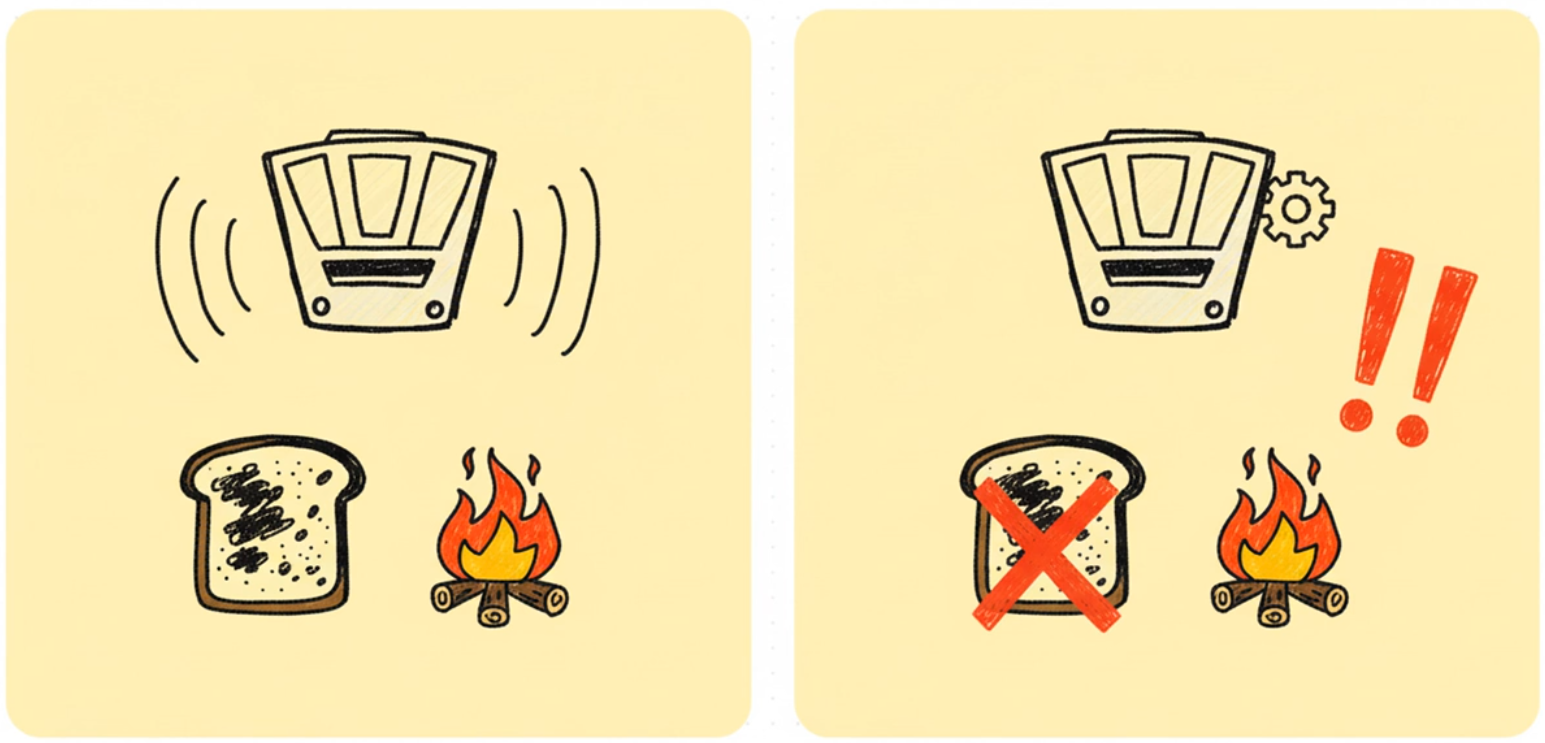
Sensitive to smoke (toast or fire?)
Discern type of smoke
The Goal: Sensitive & Selective Sensing
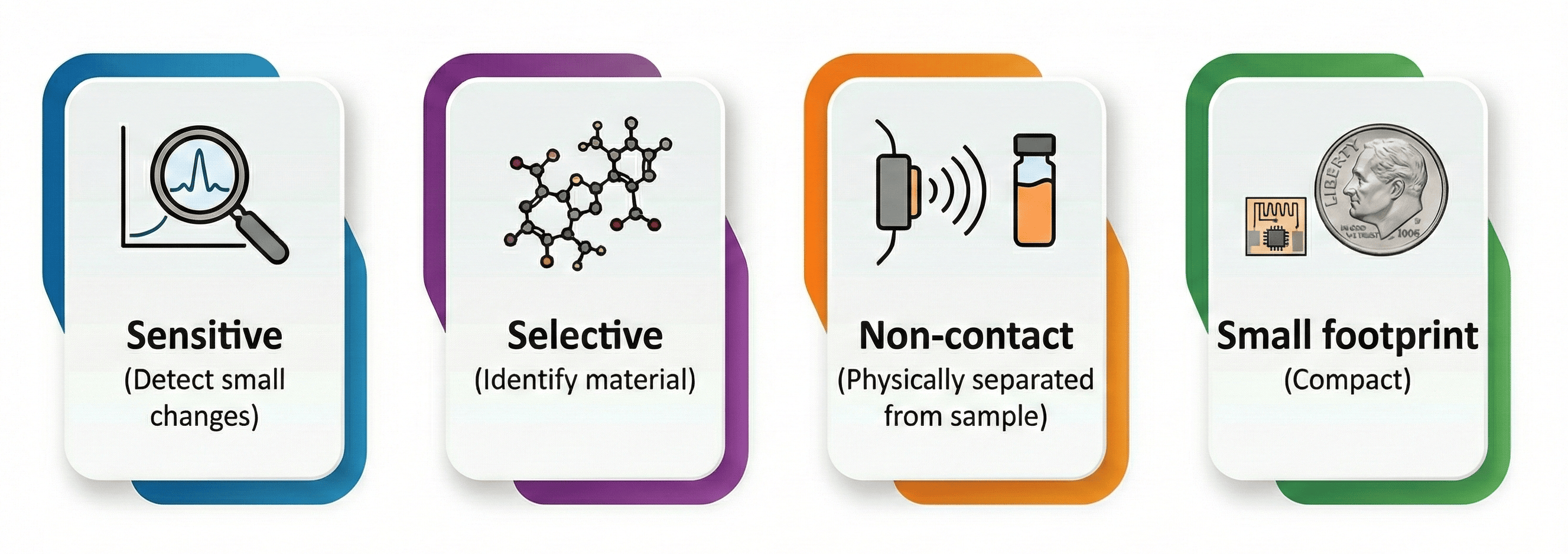
Thesis Objectives
-
Sensitivity & Size Optimization
Maximize sensitivity per unit area. -
Liquid Measurement & Automation
Reliable characterization of fluids. -
AI-Enabled Sensing Modalities
Selectivity and remote sensing via ML.
Fundamentals
Planar Technology
Guiding Waves
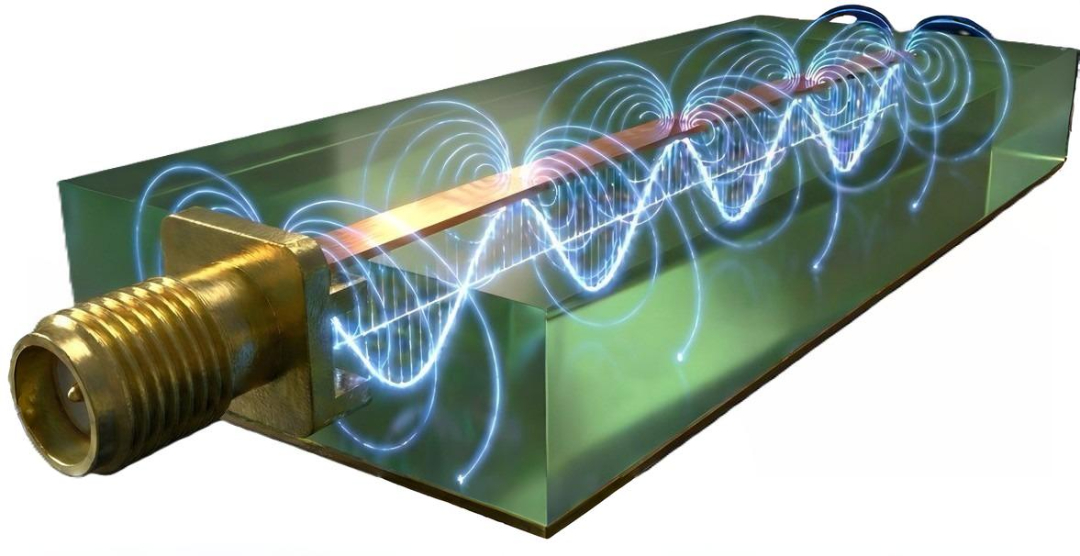
- Microstrip & CPW lines
- Confines field to a specific region
Benefits
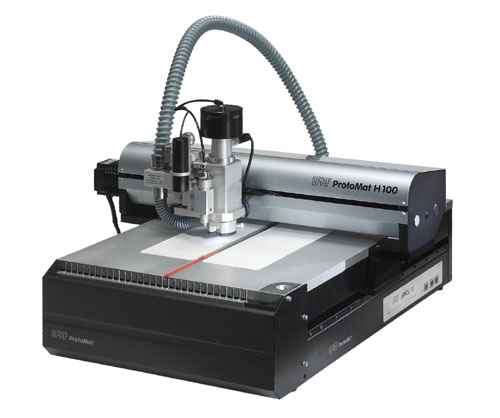
- Controllability
- Low Cost
- Easy Fabrication (CNC)
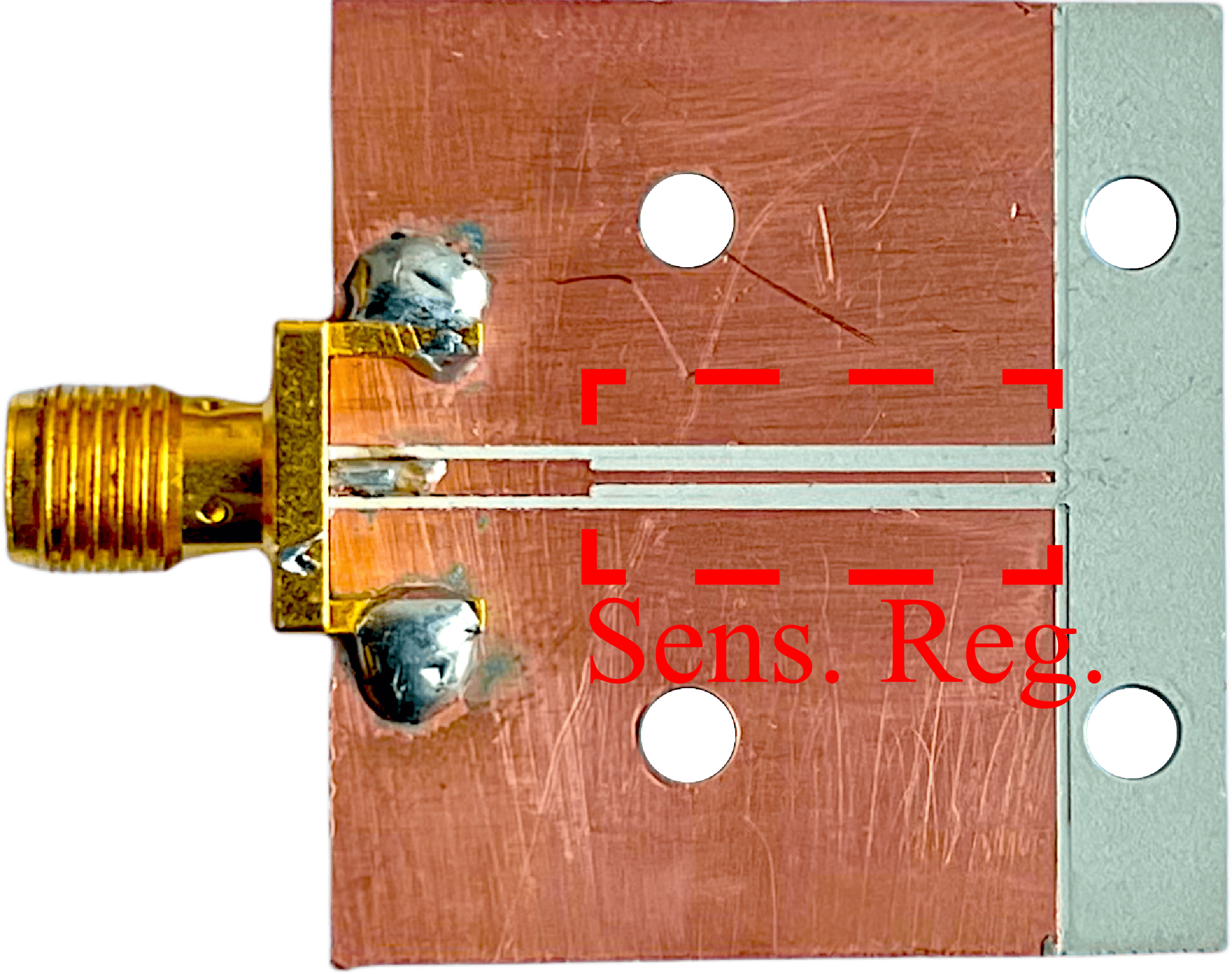
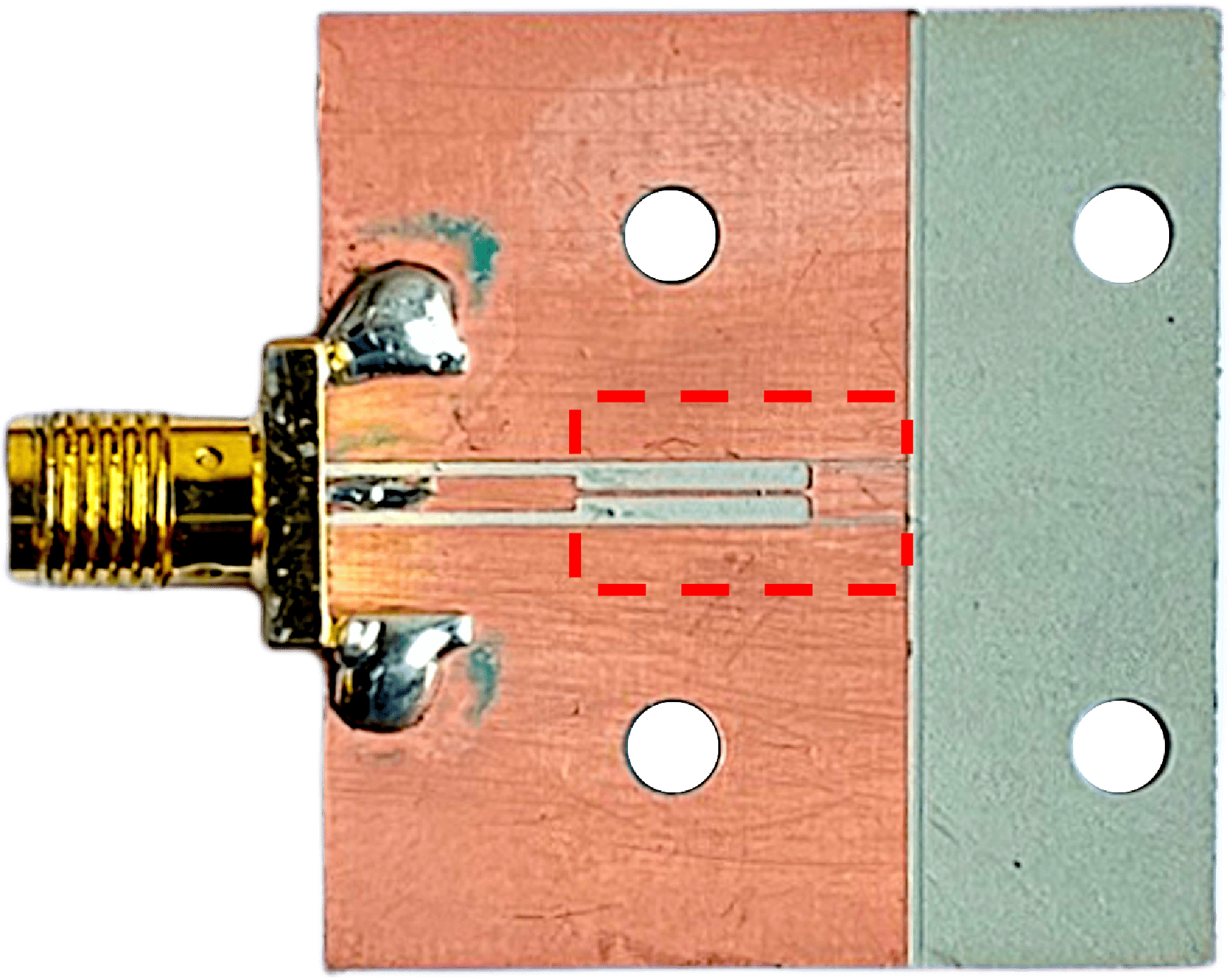
Resonators
- Sensing Region: Where field interacts with MUT (Material Under Test).
- Resonance: High sensitivity to dielectric changes.
- Topology: Can be shaped to optimize interaction.
Measurement: VNA
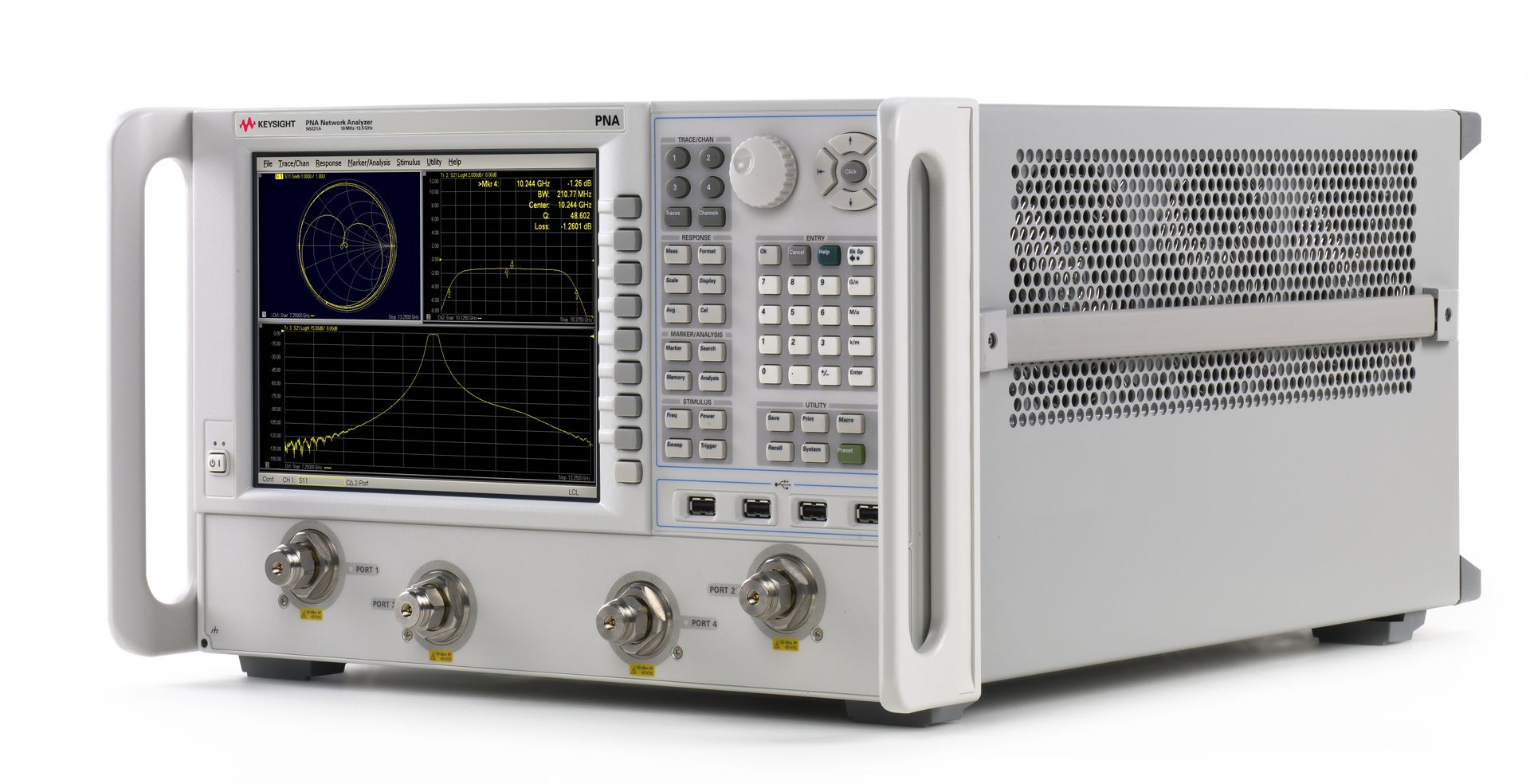
- Vector Network Analyzer (VNA): The "instrumental" part of the measurement.
- Function: Generates signal and analyzes reflection and transmission.
- Parameter: Reflection ($\rho$) and Transmission ($\tau$) Coefficients.
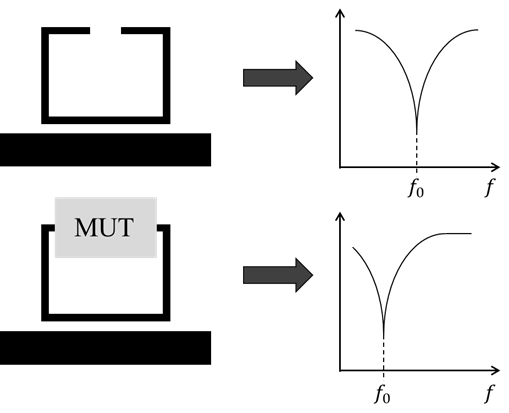
Frequency Variation Sensors
- Principle: Resonance frequency shift caused by MUT.
- Pros: Simple structure but complex readout.
- Cons: Spectrum analysis required for measurement.
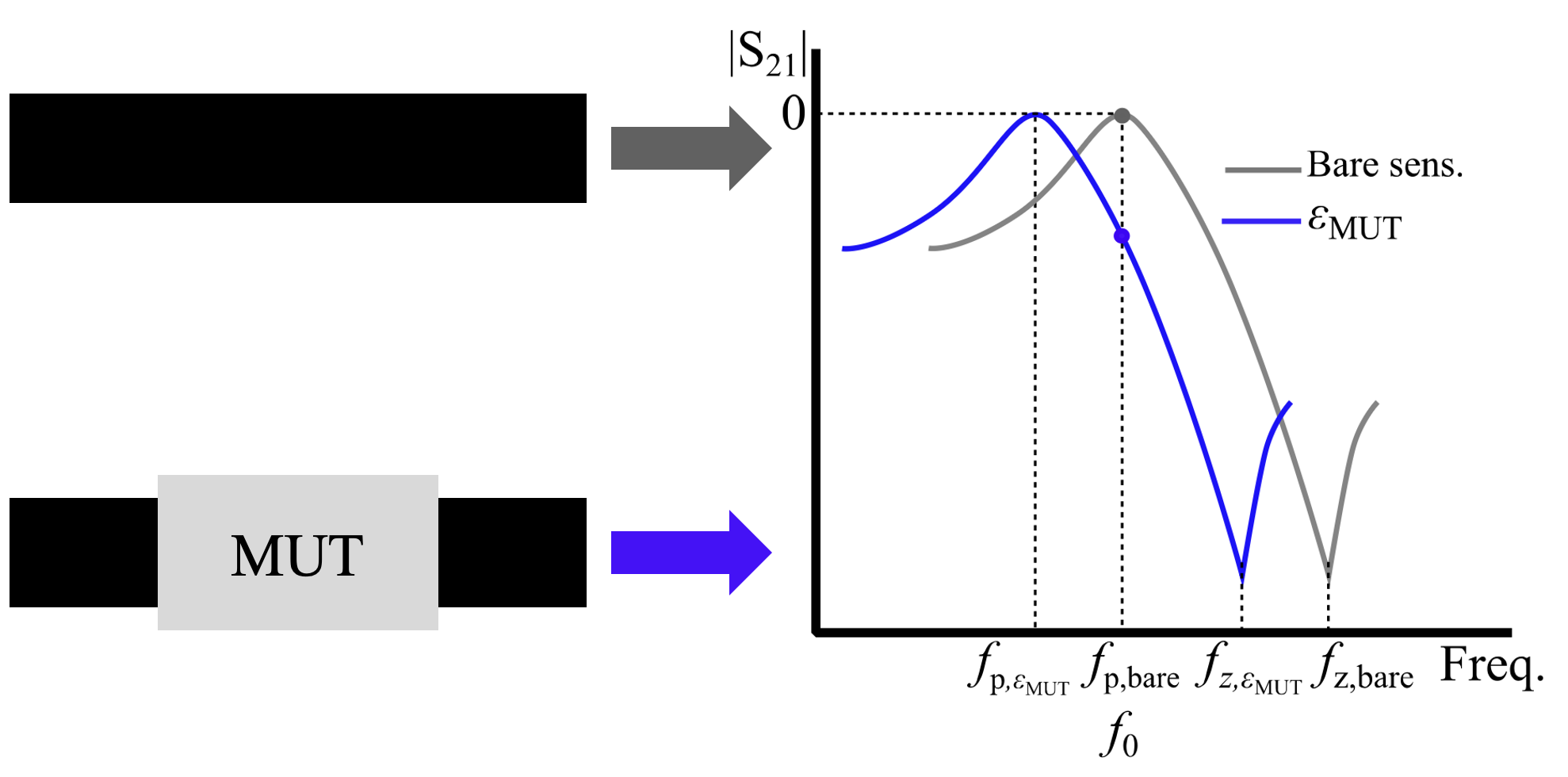
Magnitude Variation Sensors
- Principle: Variation in Q-factor or peak/notch attenuation.
- Pros:
- Simple scalar readout.
- Single frequency operation.
- Cons: Susceptibility to noise.
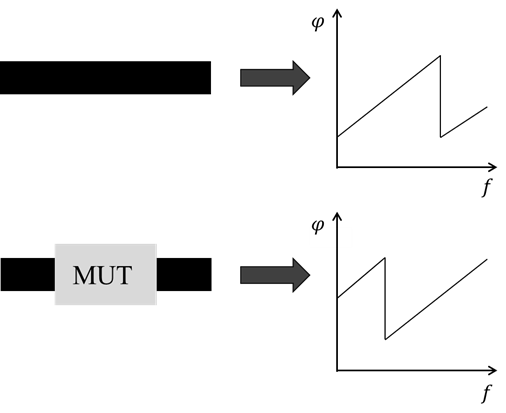
Phase Variation Sensors
- Principle: Phase shift at a single frequency.
- Pros:
- Single frequency operation.
- Robust against EMI.
- Cons: Trade-off between size and sensitivity (requires long lines).
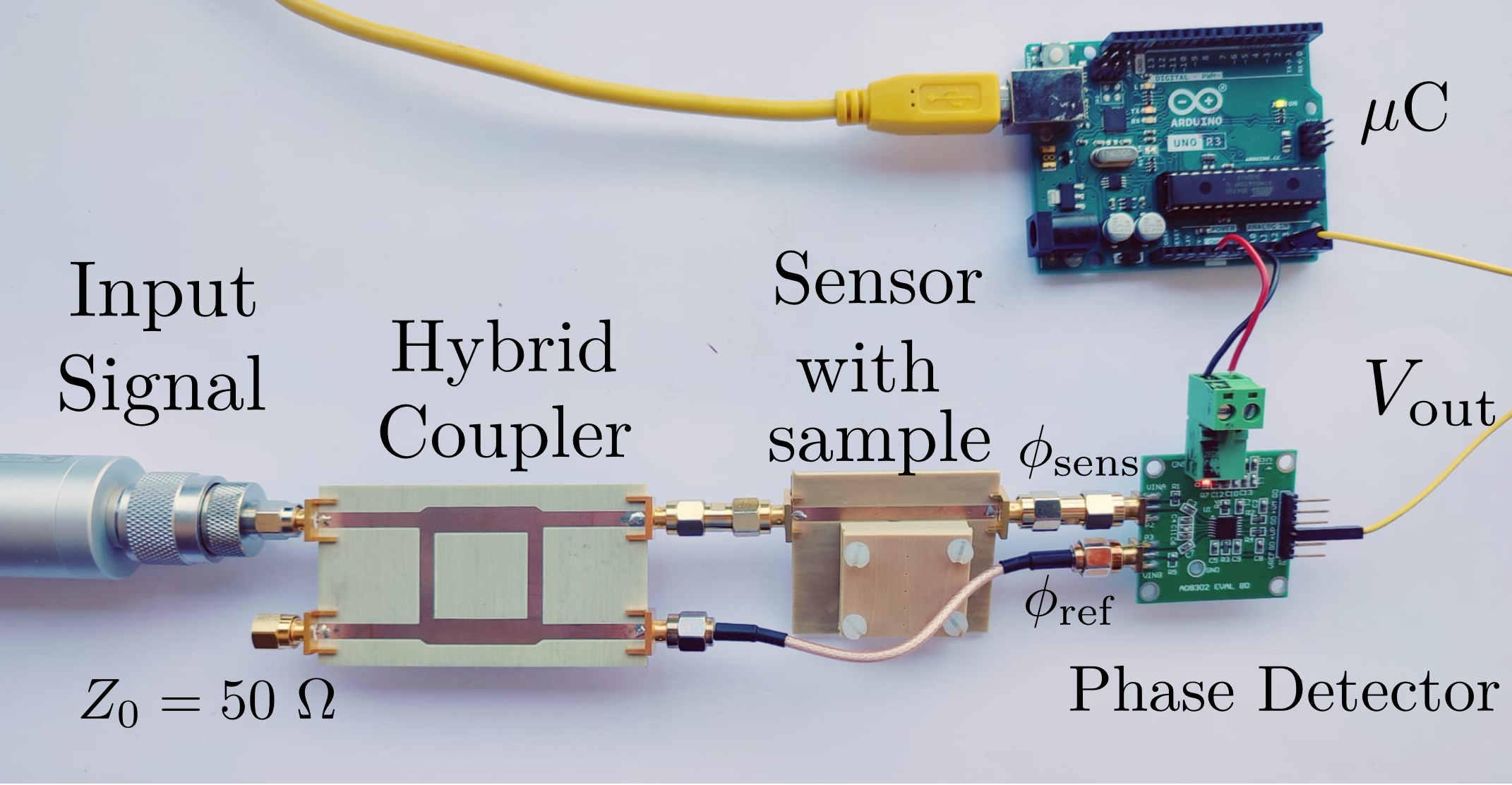
Readout Strategy
- Single Frequency Operation:
- Focus on one frequency where sensitivity is highest.
- Reduces readout complexity and cost.
- Accessibility:
- From Lab Equipment to Portable Devices (LiteVNA ~100€).
- Low cost phase detector (AD8302 ~5€).
Sensitivity Enhancement
Defining Sensitivity
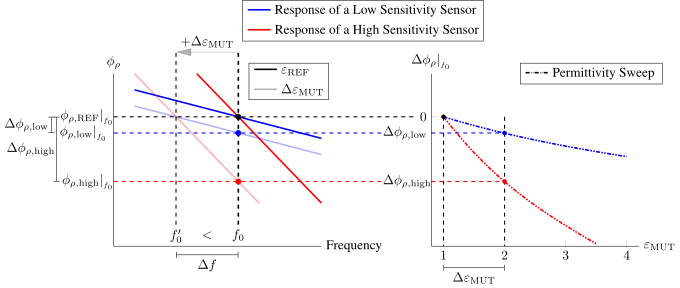
Sensitivity ($S$) is defined as the change in the phase of the reflection coefficient ($\phi_\rho$) per unit change in permittivity ($\varepsilon_\mathrm{MUT}$).
$ S = \frac{d\phi_\rho}{d\varepsilon_\mathrm{MUT}} $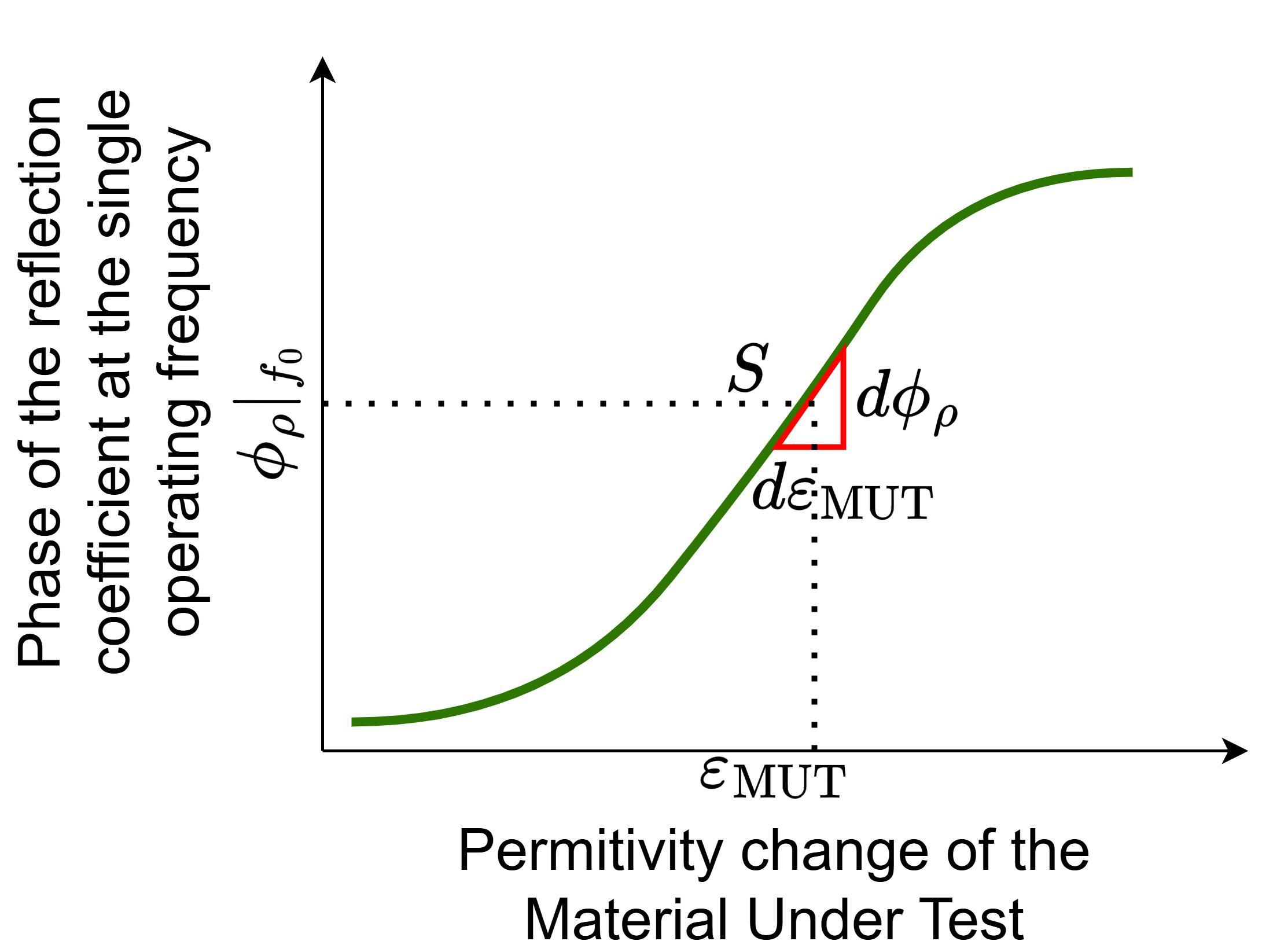
Sensitivity Decomposition
We can decompose sensitivity into two independent factors:
$ S = \underbrace{\frac{d\phi}{d\upsilon}}_{\text{Electrical Transformation}} \cdot \underbrace{\frac{d\upsilon}{d\varepsilon_\mathrm{MUT}}}_{\text{Field Interaction}} $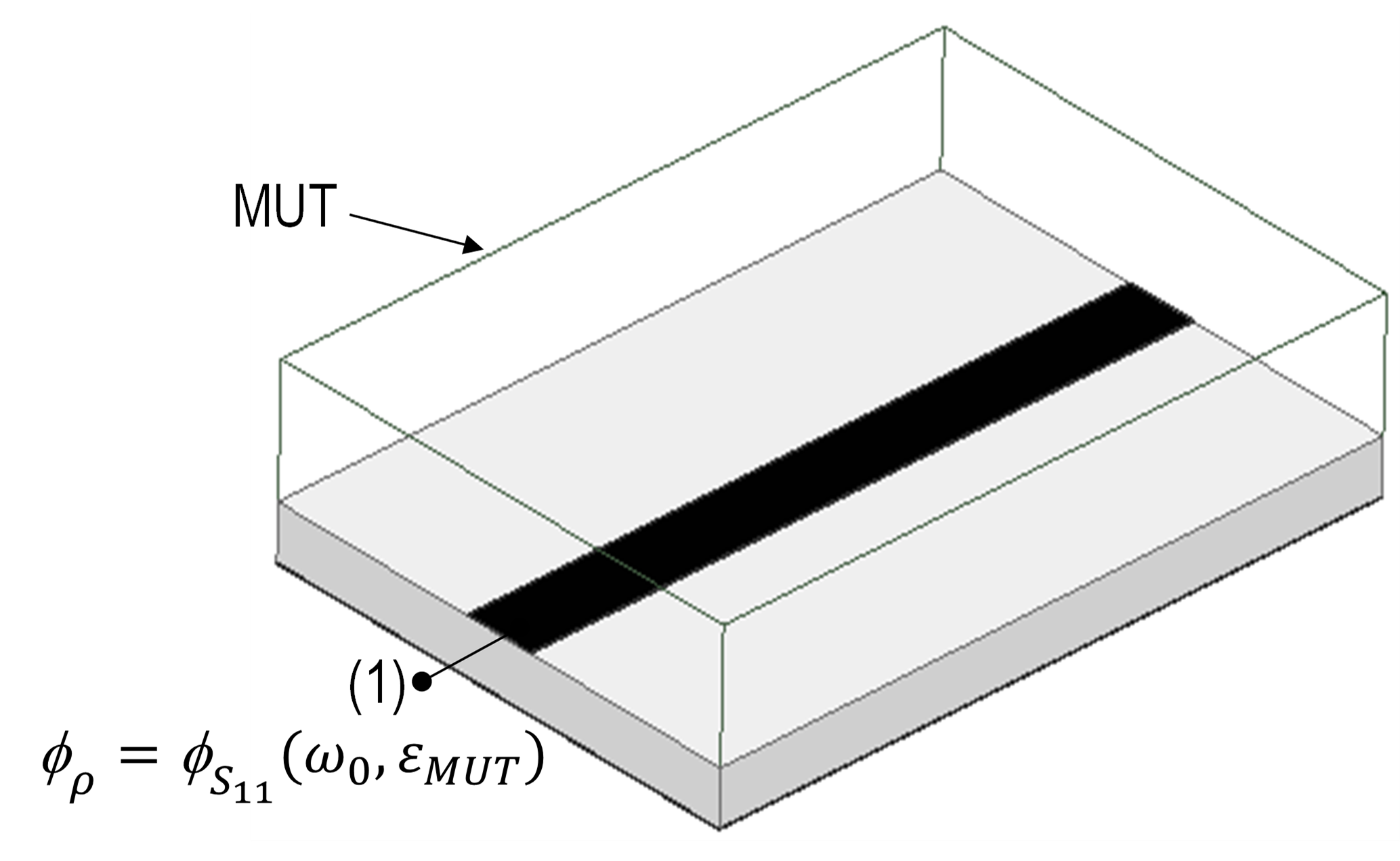
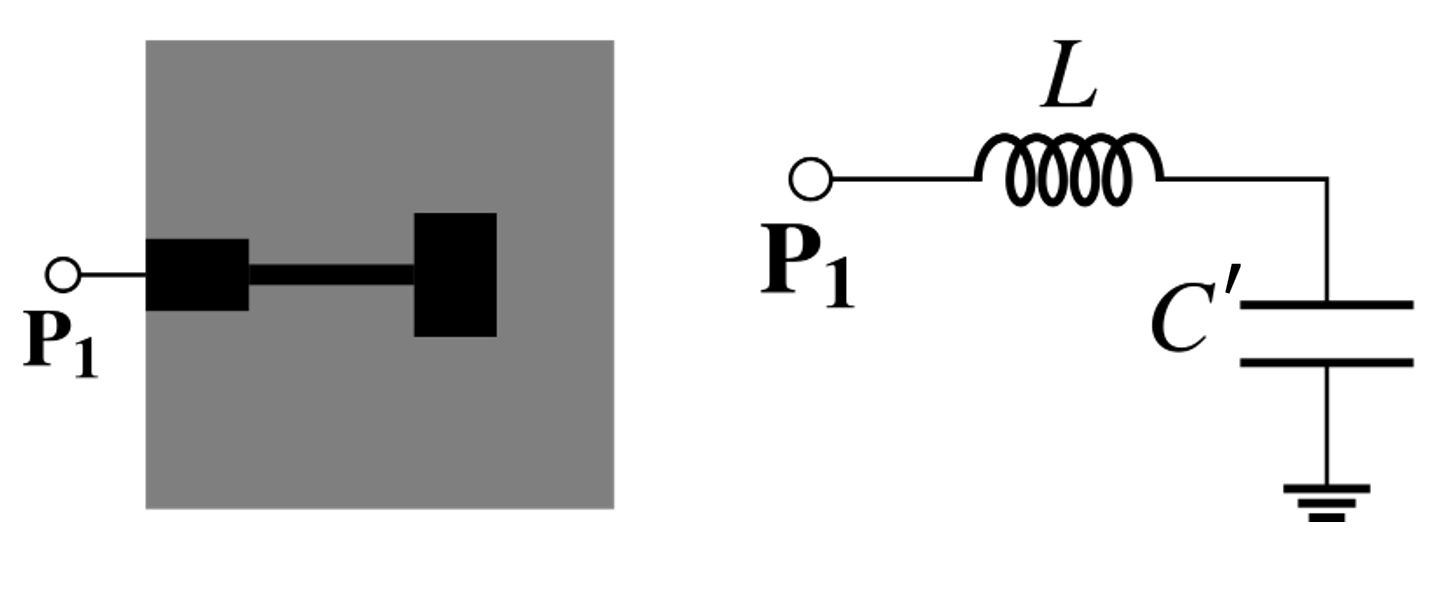
Field Interaction ($\frac{d\upsilon}{d\varepsilon_{MUT}}$)
- Physics: How the electric field penetrates the material.
- Optimization:
- Maximize field concentration.
- Use thin substrates or CPW structures.
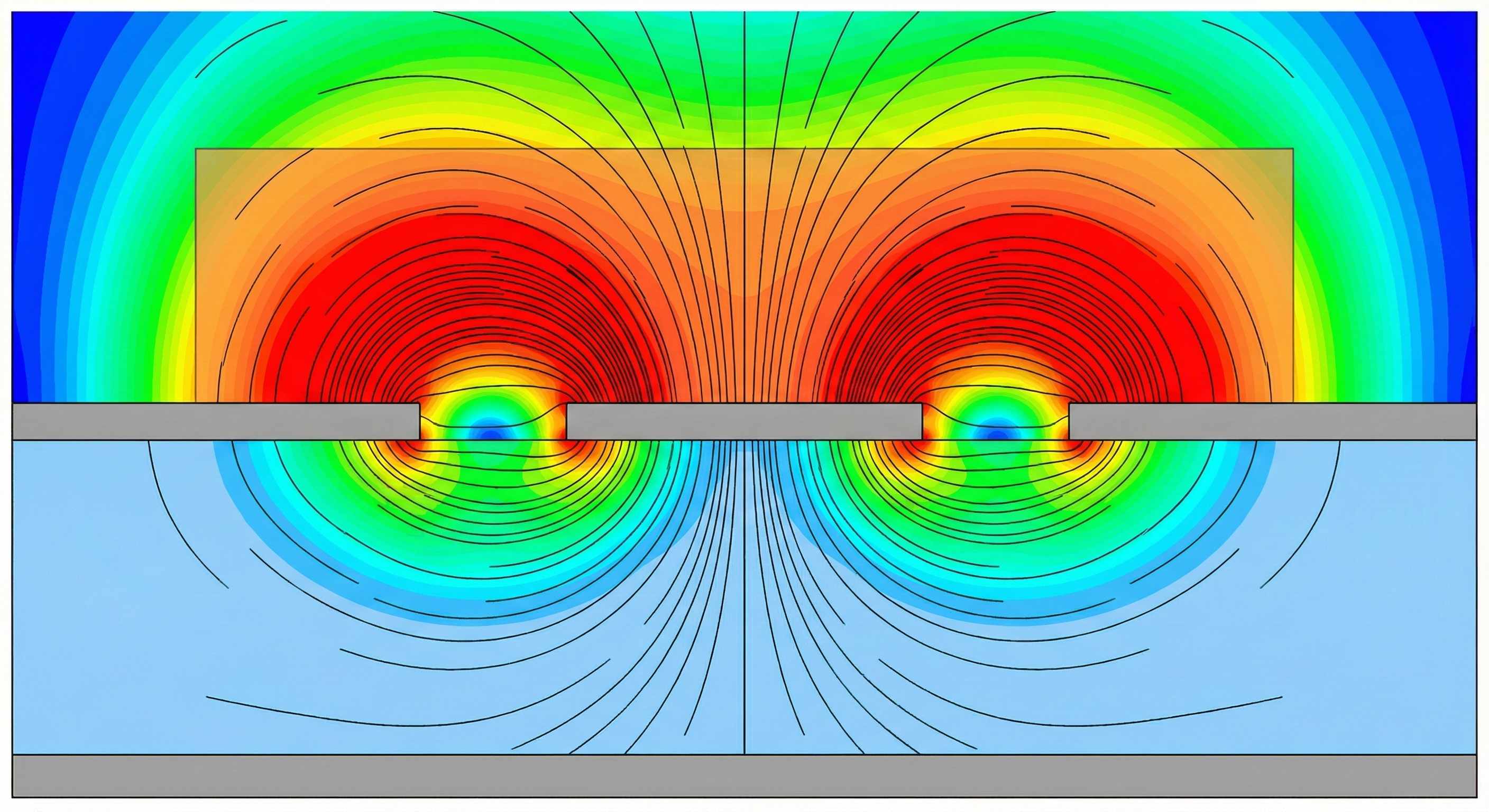
Electrical Transformation ($\frac{d\phi}{d\upsilon}$)
- Circuit: How the sensor circuital elements converts parameter change to phase shift.
- Optimization:
- Phase Slope Enhancement Techniques.
- This is the term where we can gain orders of magnitude!
Four Ways to Increase Sensitivity
1. High/Low Impedance Inverters
Cascading phase shifters, increasing overall sensor area.
2. Weakly Coupled Resonators
Exploiting split resonances due to low coupling, sensing region.
3. Resonance-Antiresonance
Smallest sensing region, dynamically tunable coupling.
4. Loss Engineering
Using loss as a design parameter, compatible with previous techniques.
1. High/Low Impedance Inverters
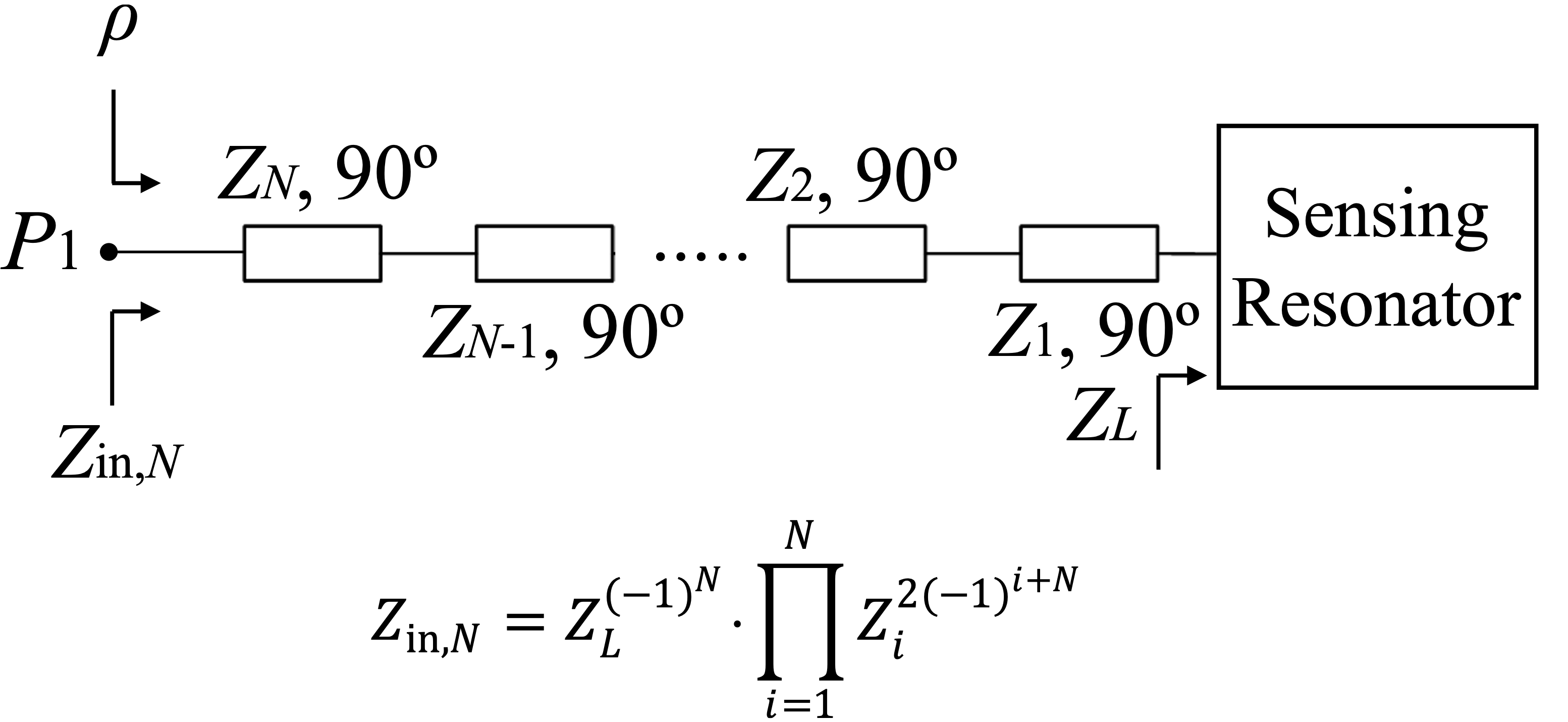
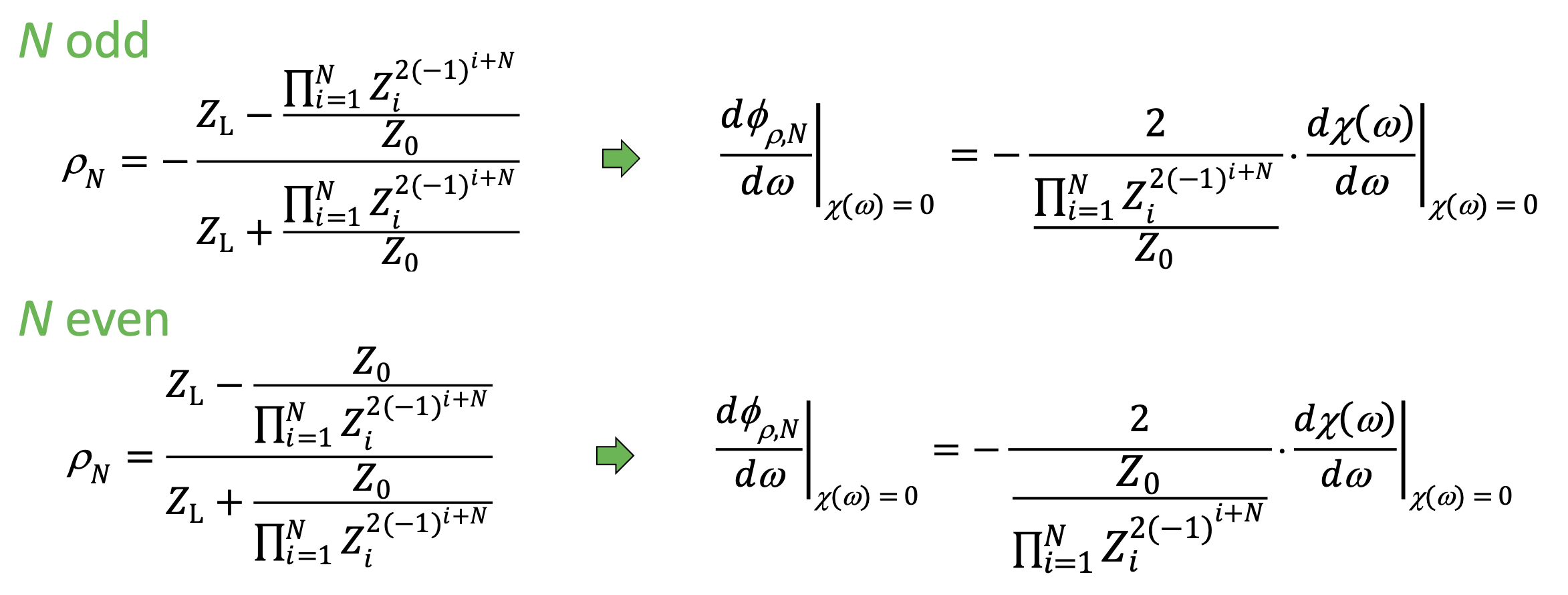
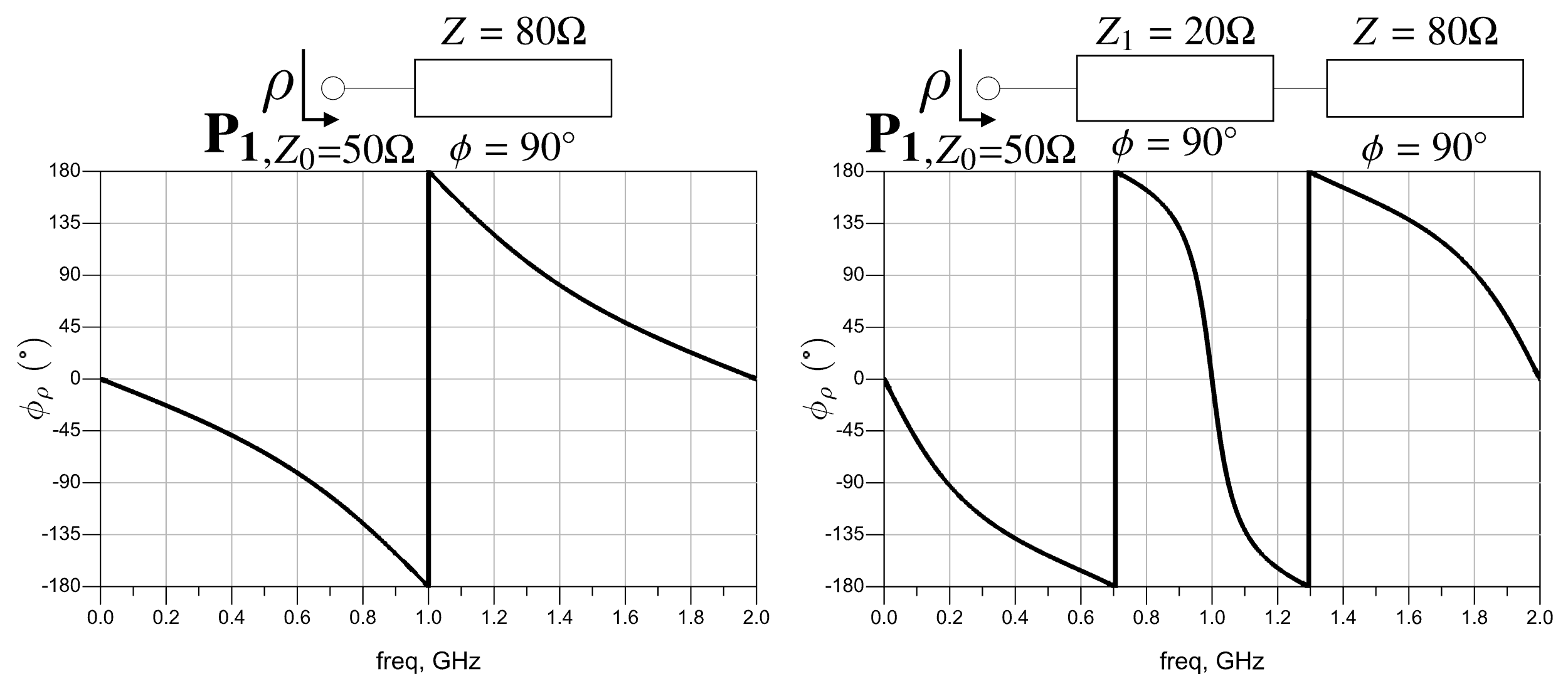
Concept: Cascading 90° transmission lines (inverters) with high/low impedance to multiply the phase slope.
Inverters: Implementation
- Structure: Stepped Impedance Resonator (SIR) + Inverters.
- Goal: Reduce size while maintaining the "multiplied" slope.
- Result: High sensitivity in a compact footprint.
Inverters: Results
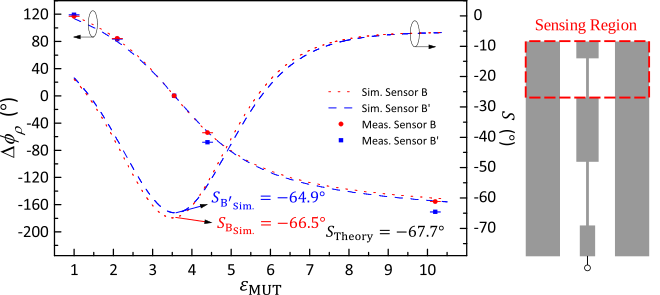
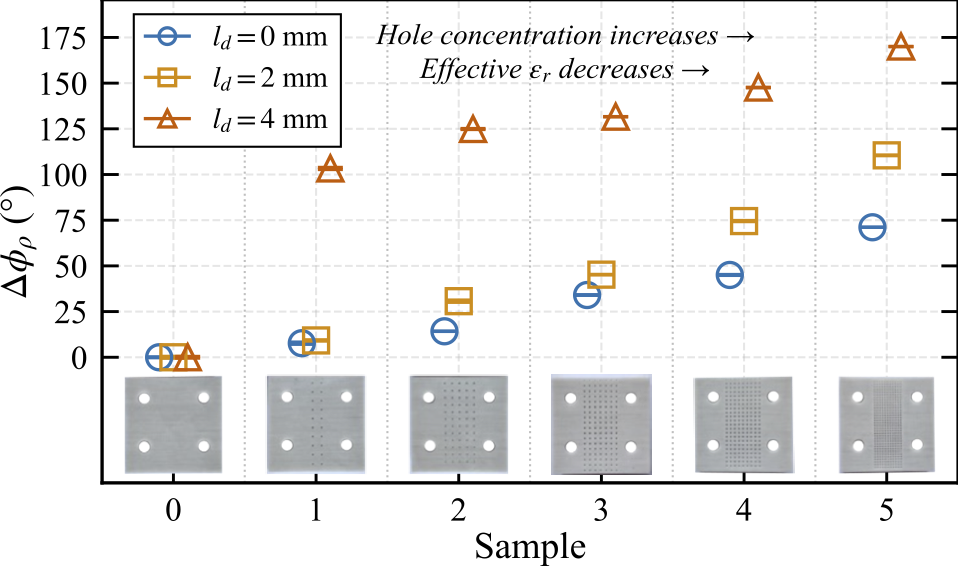
- Validated with perforated dielectric samples.
- Outcome: Sensitivity scales with the number of inverters.
- Limitation: Size grows with each inverter stage.
2. Coupled Lines & SIRs
Concept: Two resonators coupled together create two split frequencies.
Reducing coupling $\rightarrow$ Resonances get closer $\rightarrow$ Steeper Phase Slope.
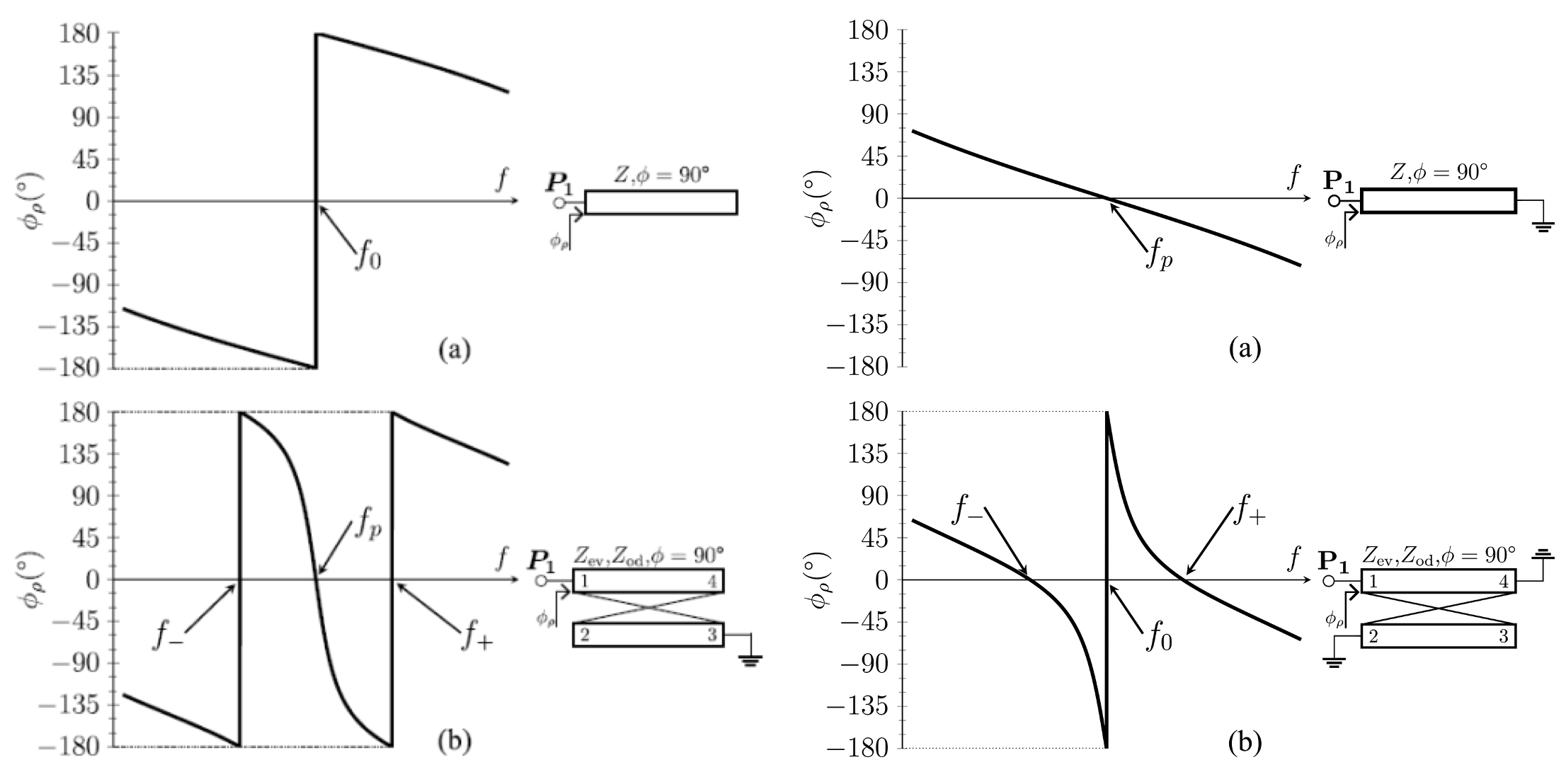
The Coupling Effect
- Strong Coupling: Peaks far apart, shallow slope.
- Weak Coupling: Peaks close, steep slope.
- Limit: If coupling is too weak, recover the single resonator behavior.
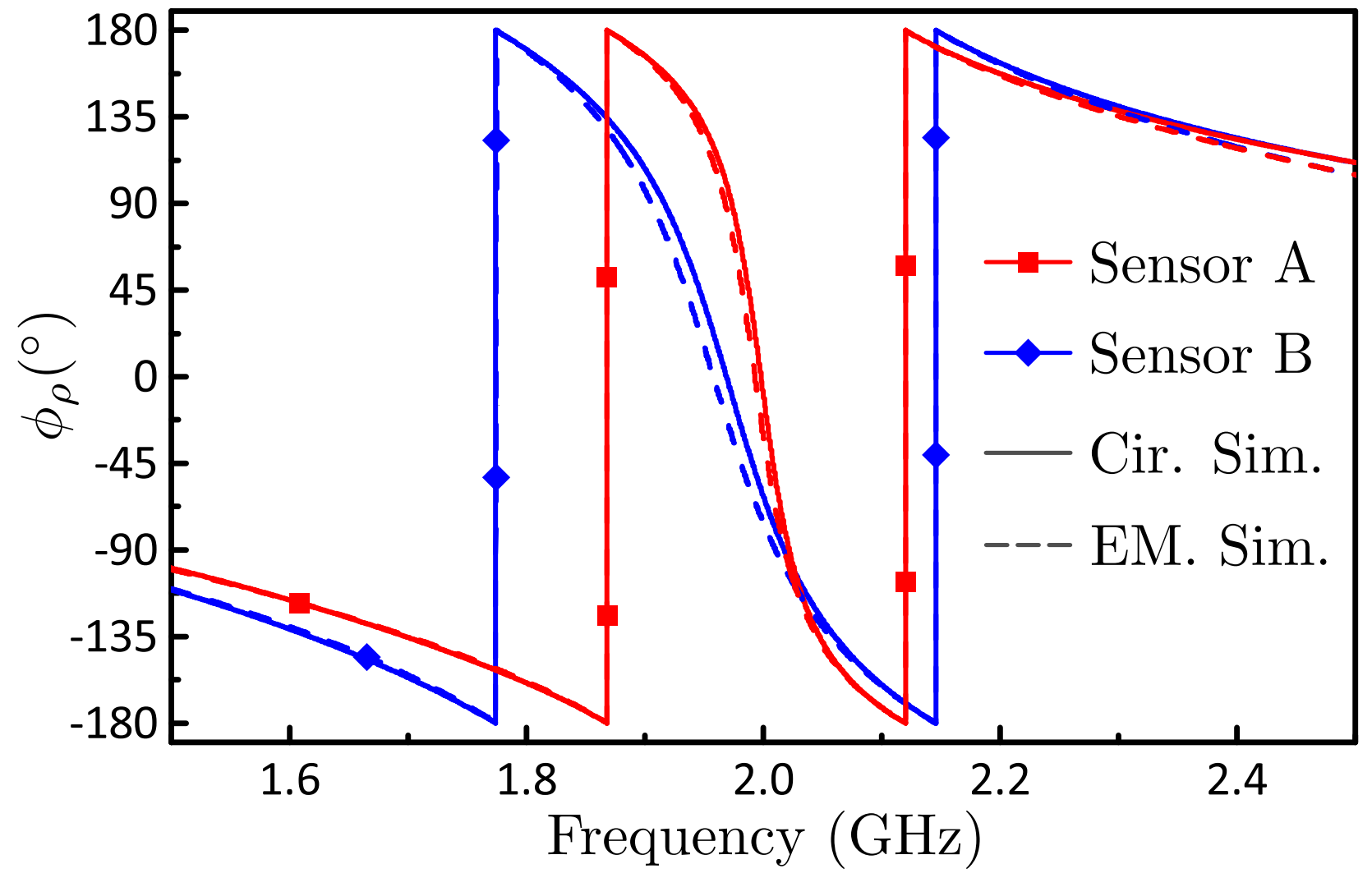

Coupled SIRs Results
- Unified Framework: Analyzed all 4 coupling topologies.
- Achievement: Highest senstivity at the time.
- Publications: 5 compendium papers from this technique.
Defect Ground Resonators
Concept: DB-DGS (Dumbbell Defected Ground Structure).
- Separates fluid (ground plane) from circuit (top plane).
- Allows easy integration of fluidic channels.
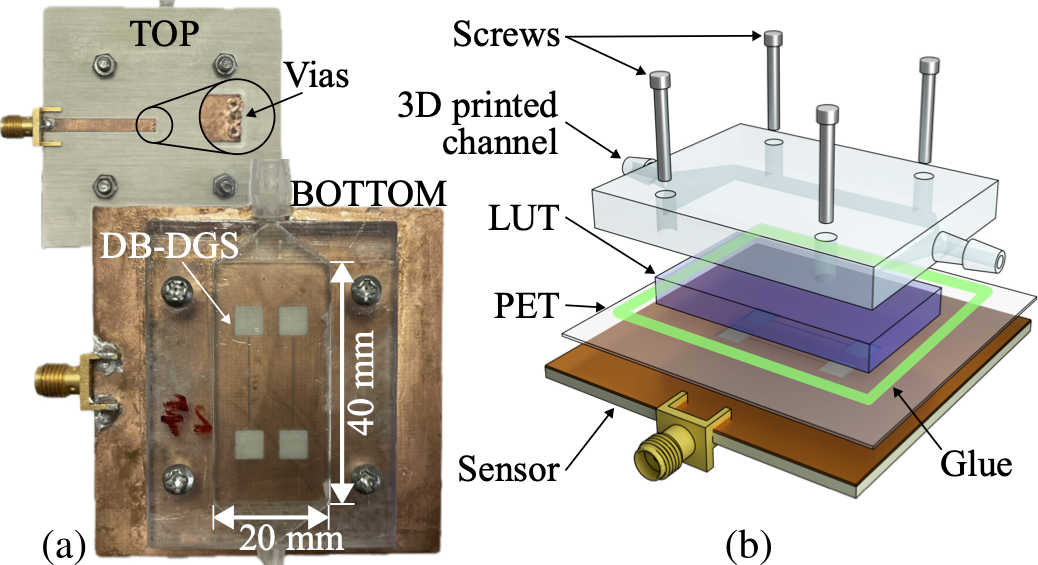
Publication: [pub:DB-DGS]
Microfluidics Integration
Challenge: Measuring liquids requires precise handling.
- Liquids allow fine control of permittivity.
- Separate electronics from liquid.
- Need repeatability to validate sensors.
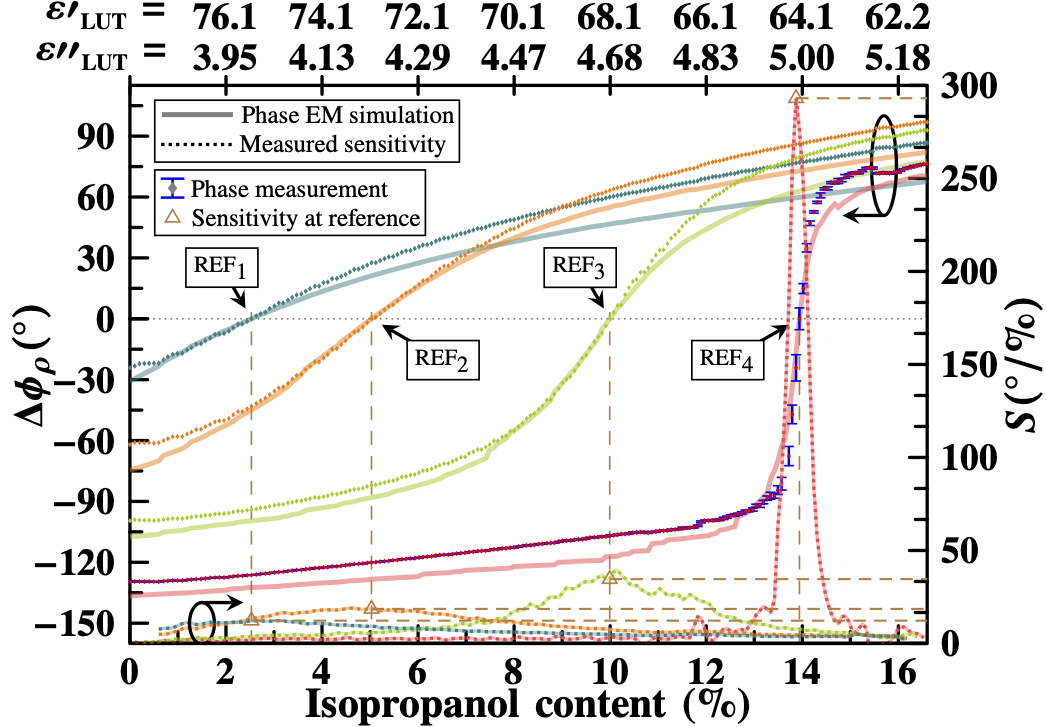
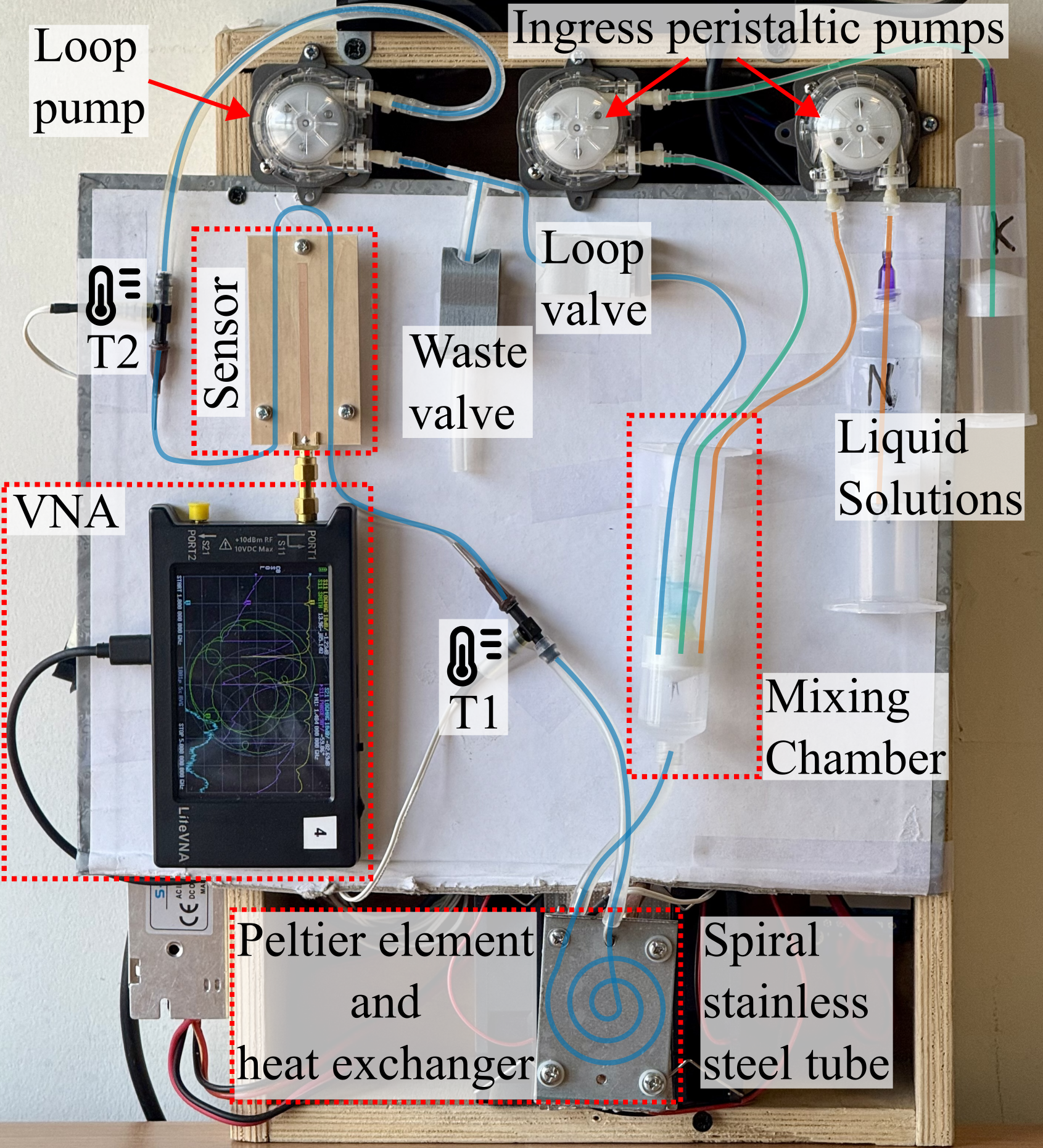
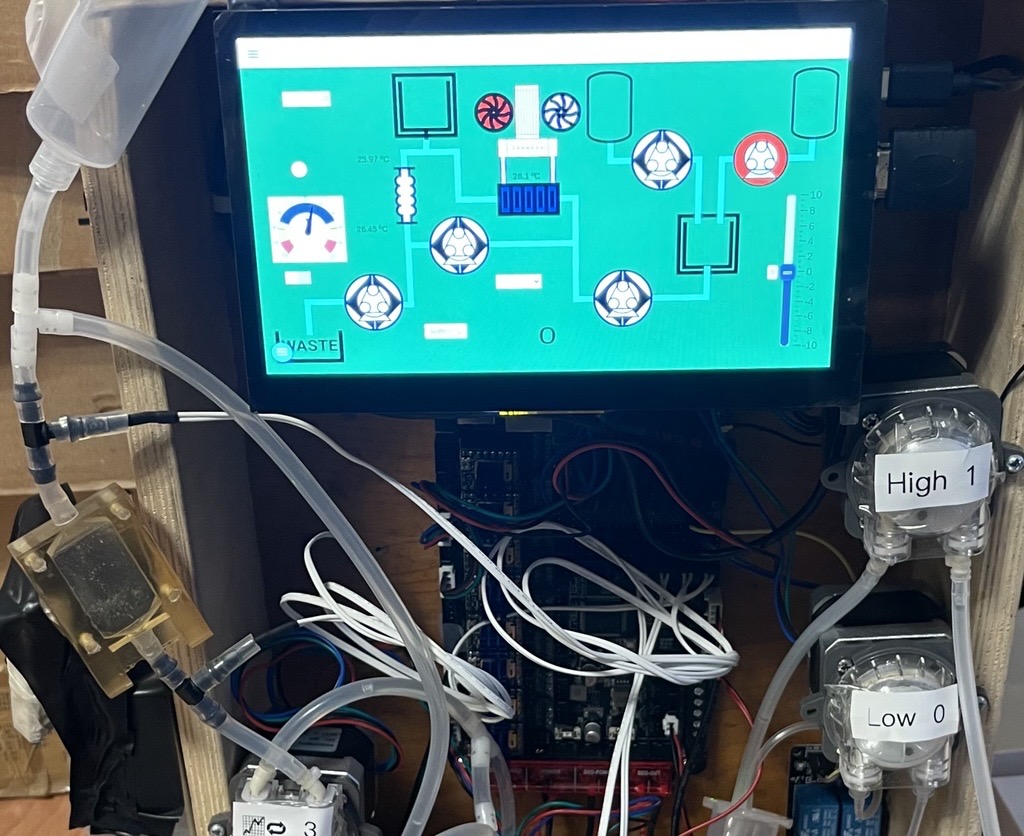
Automated System
- System: Pumps + Temperature Control + VNA.
- Benefit: Automated validation of thousands of samples.
- Key for AI: Enabled generation of large datasets.
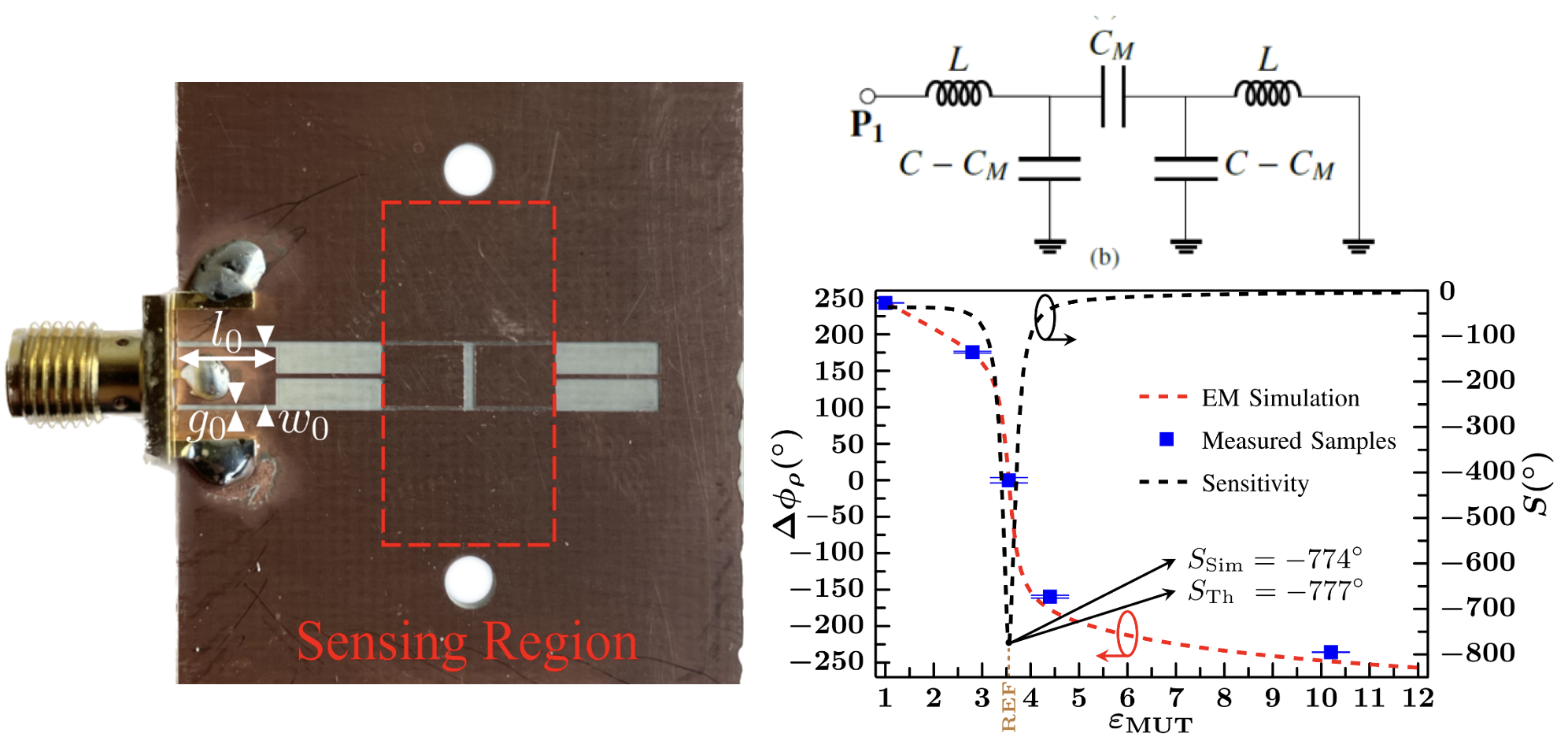
3. Resonance-Antiresonance
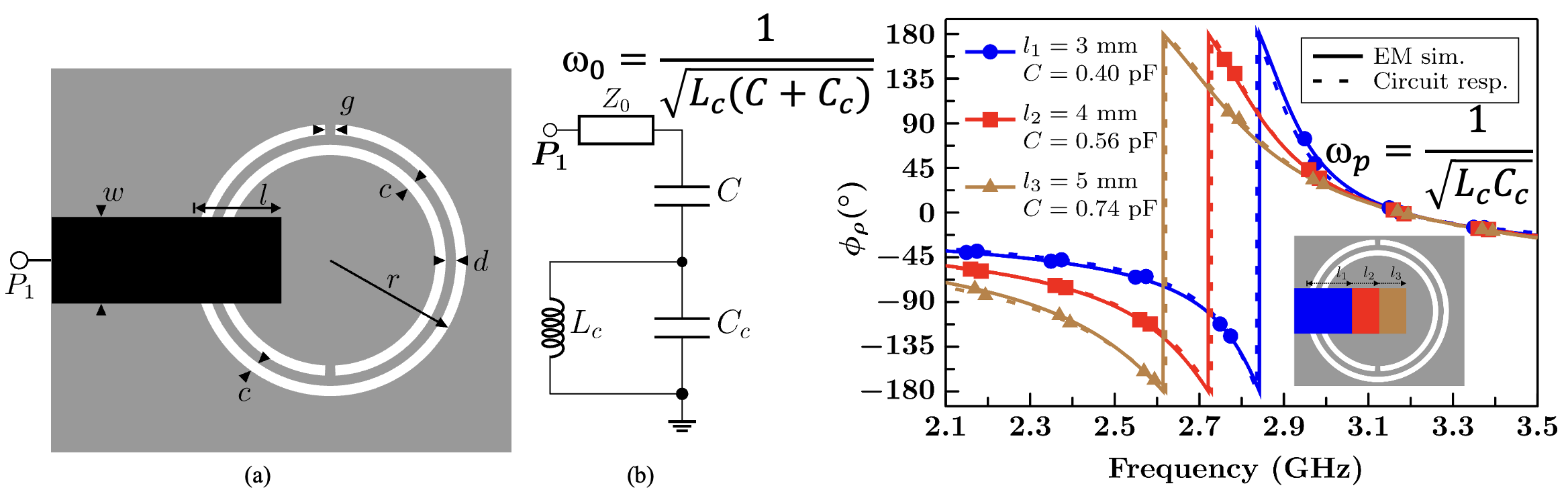
Concept: Interaction between a resonance and an antiresonance.
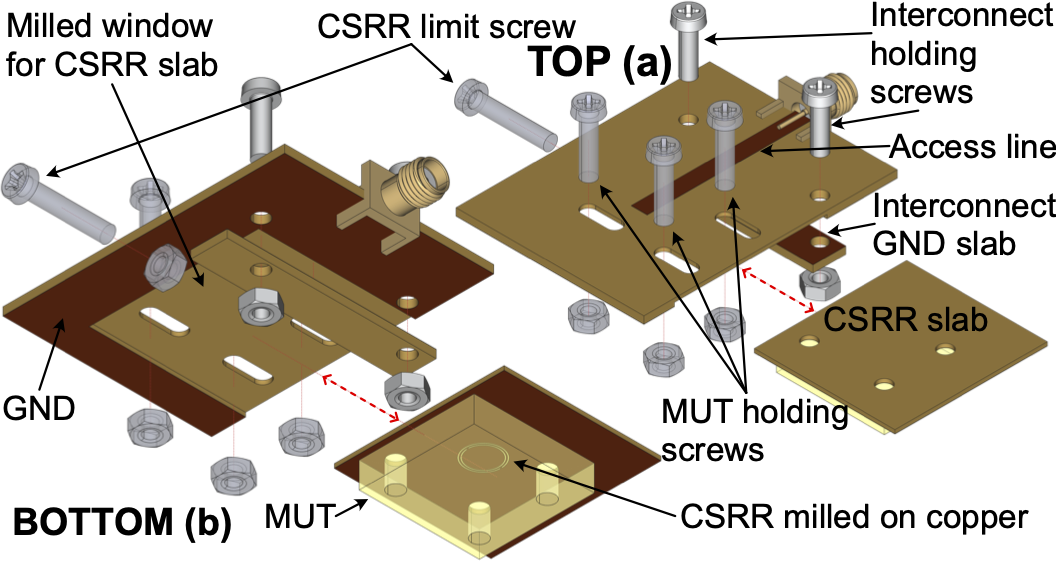
Mechanism: Ground-plane CSRR coupled to a microstrip line, resonance shifts with coupling while antiresonance stays fixed.
Mechanical Tuning
- Innovation: Sensitivity can be tuned by moving the feed line.
- Benefit: Adapt sensitivity to the application without redesigning.
Results
- Sensitivity: > 6350° per unit permittivity.
- Record: Highest sensitivity achieved in the thesis.
- Application: Structural health monitoring (corrosion) or liquid analysis.
4. Loss Engineering
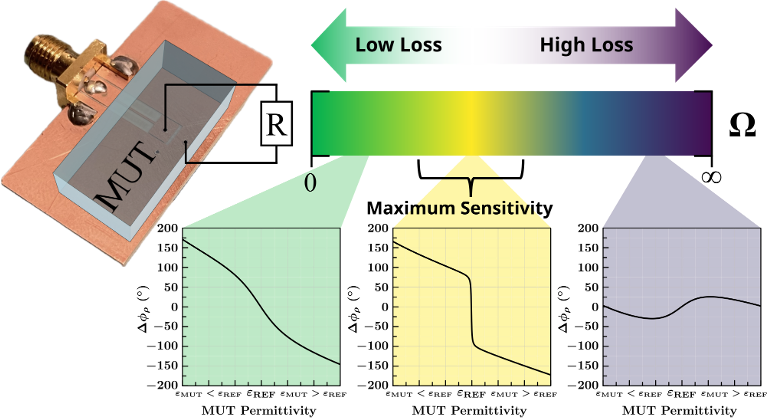
Paradigm Shift: Instead of minimizing loss, it is a design parameter.
- Concept: Losses can steepen the phase slope near resonance.
- Result: Enhanced sensitivity without changing the geometry.
Passive Implementation
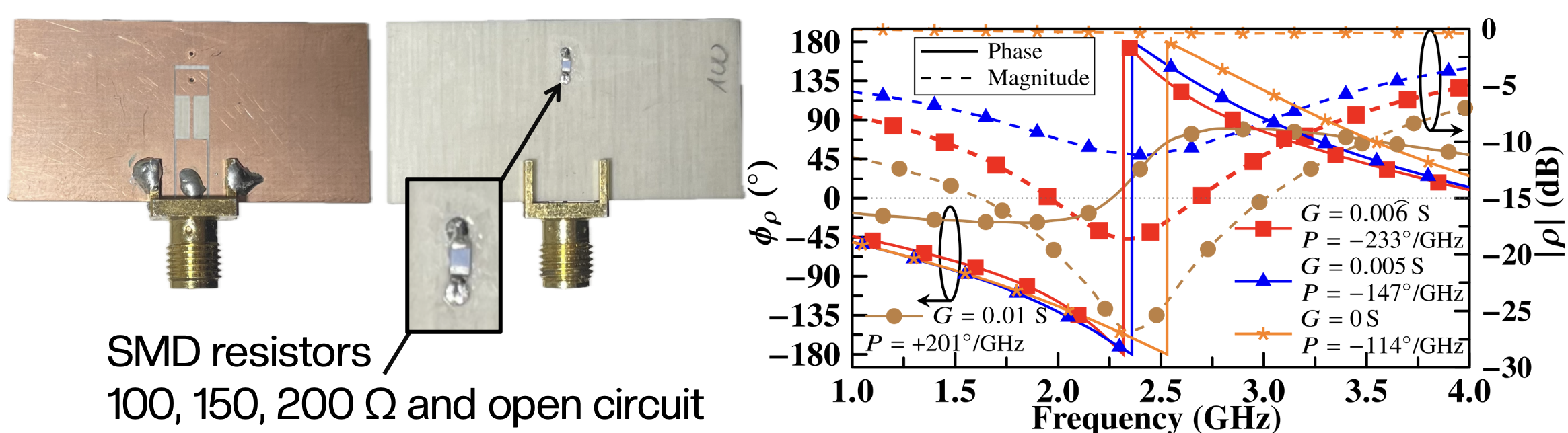
Method: Adding resistive loading to coupled lines.
- Mechanism: Resistors control the coupling quality factor.
- Outcome: Steeper phase response in the sensing region.
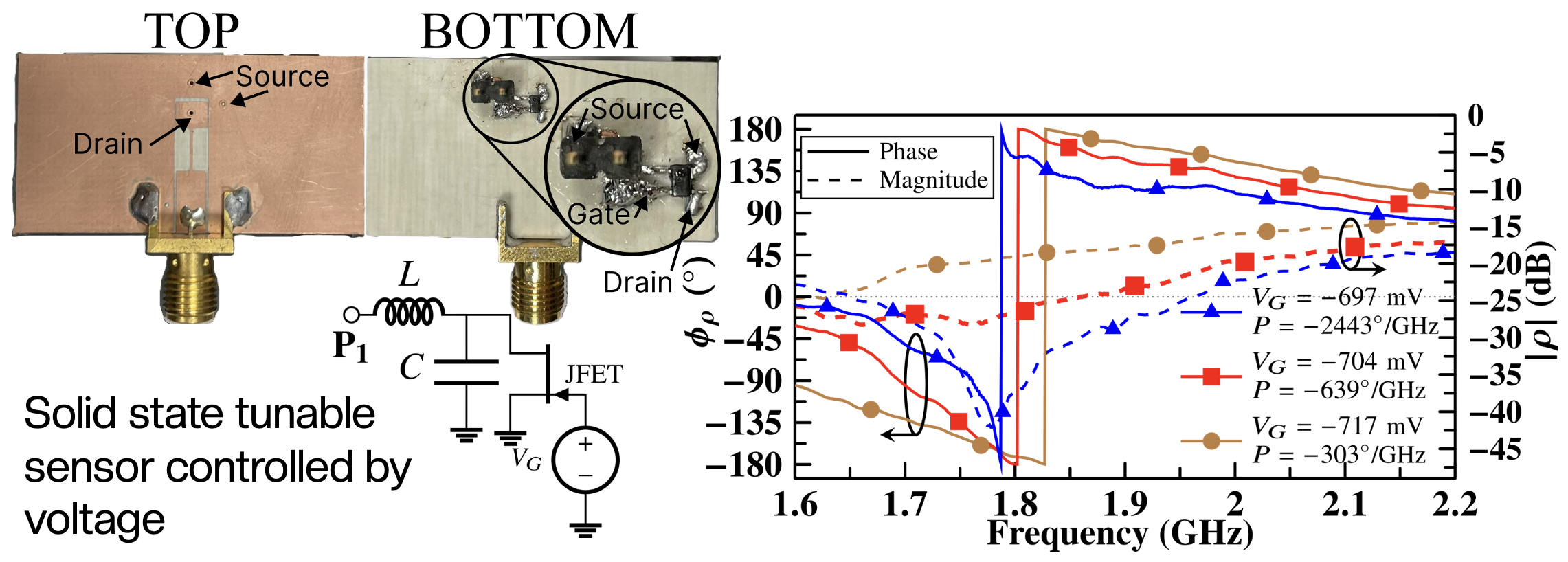
Active Tunable Sensitivity
Method: Using a JFET as a voltage-controlled resistor.
- Innovation: Real-time control of sensitivity.
- Application: Adapt the sensor to different materials dynamically.
AI-Driven Sensing
The Selectivity Challenge
High Sensitivity $\neq$ Identification
We can detect that something has changed, but not what has changed.
Arbitrary High Sensitivity Accomplished
Explore new applications where selectivity is important a part from sensitivity.
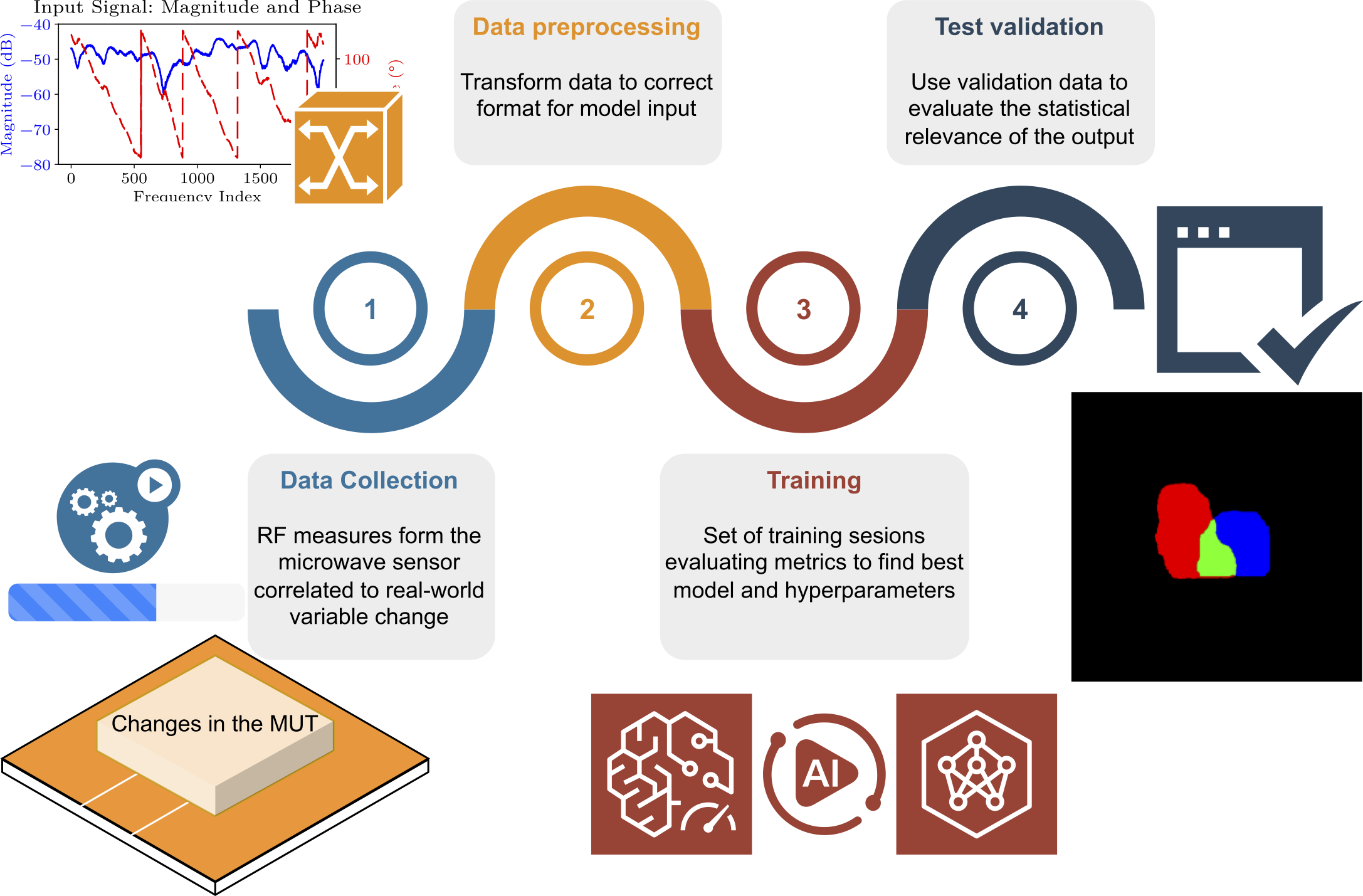
The Solution: Spectrometry + AI
- Spectrometry: Materials behave differently at different frequencies.
- Broadband Measurement: Capture the "fingerprint" of the material.
- Why AI? Analytical models are too complex for multi-variable inverse problems.
- Traditional design process: Physical Model $\rightarrow$ Analytical Inversion $\rightarrow$ Parameter
- New design process: Data $\rightarrow$ Machine Learning Model $\rightarrow$ Prediction
The Pipeline
- Design Sensor: For contrast, not just sensitivity.
- Generate Data: Automated measurements / Simulation.
- Train Model: Learn the mapping (Spectrum $\rightarrow$ Variable).
- Inference: Real-time prediction.
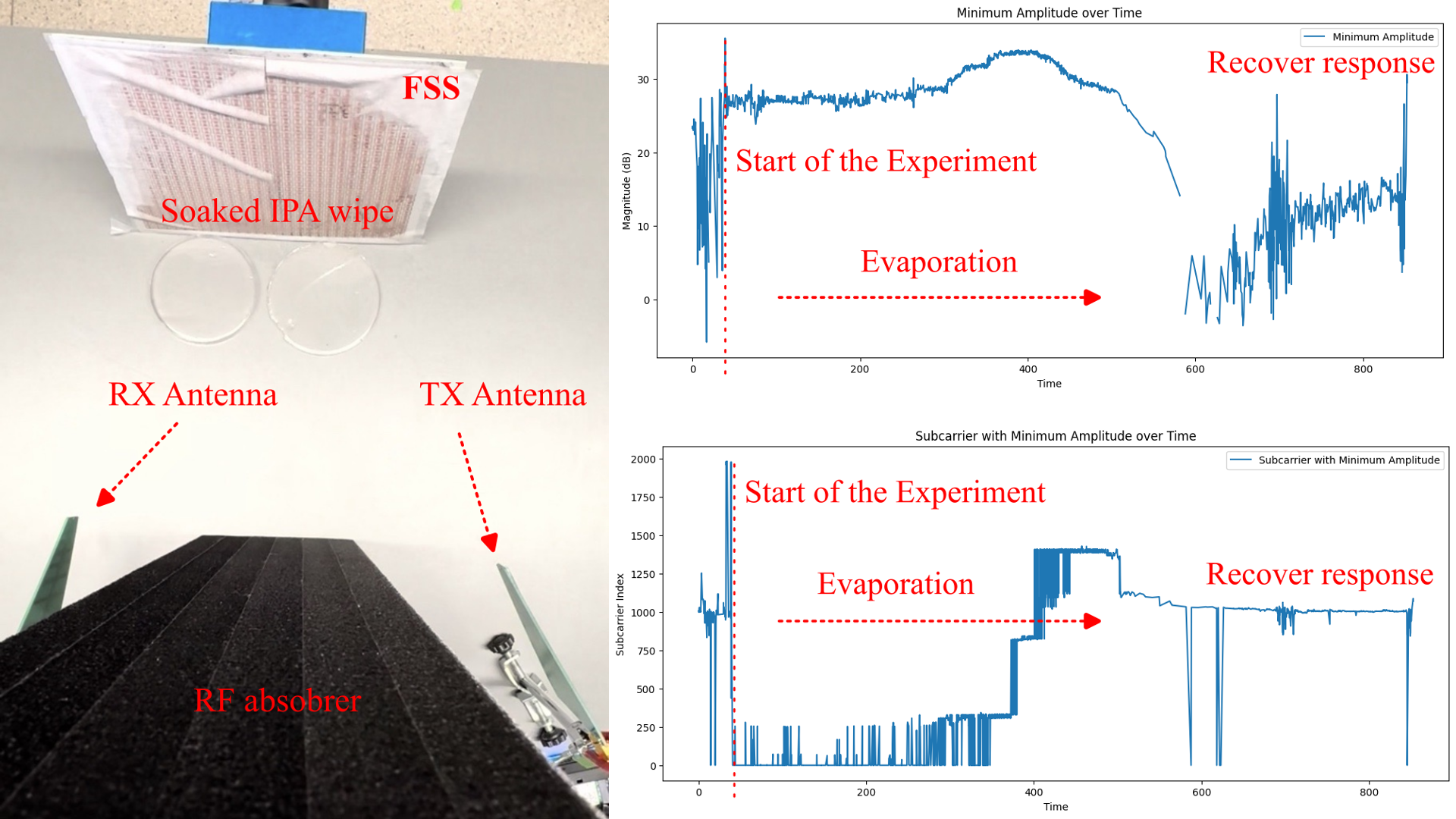
Case 1: Remote Sensing with FSS
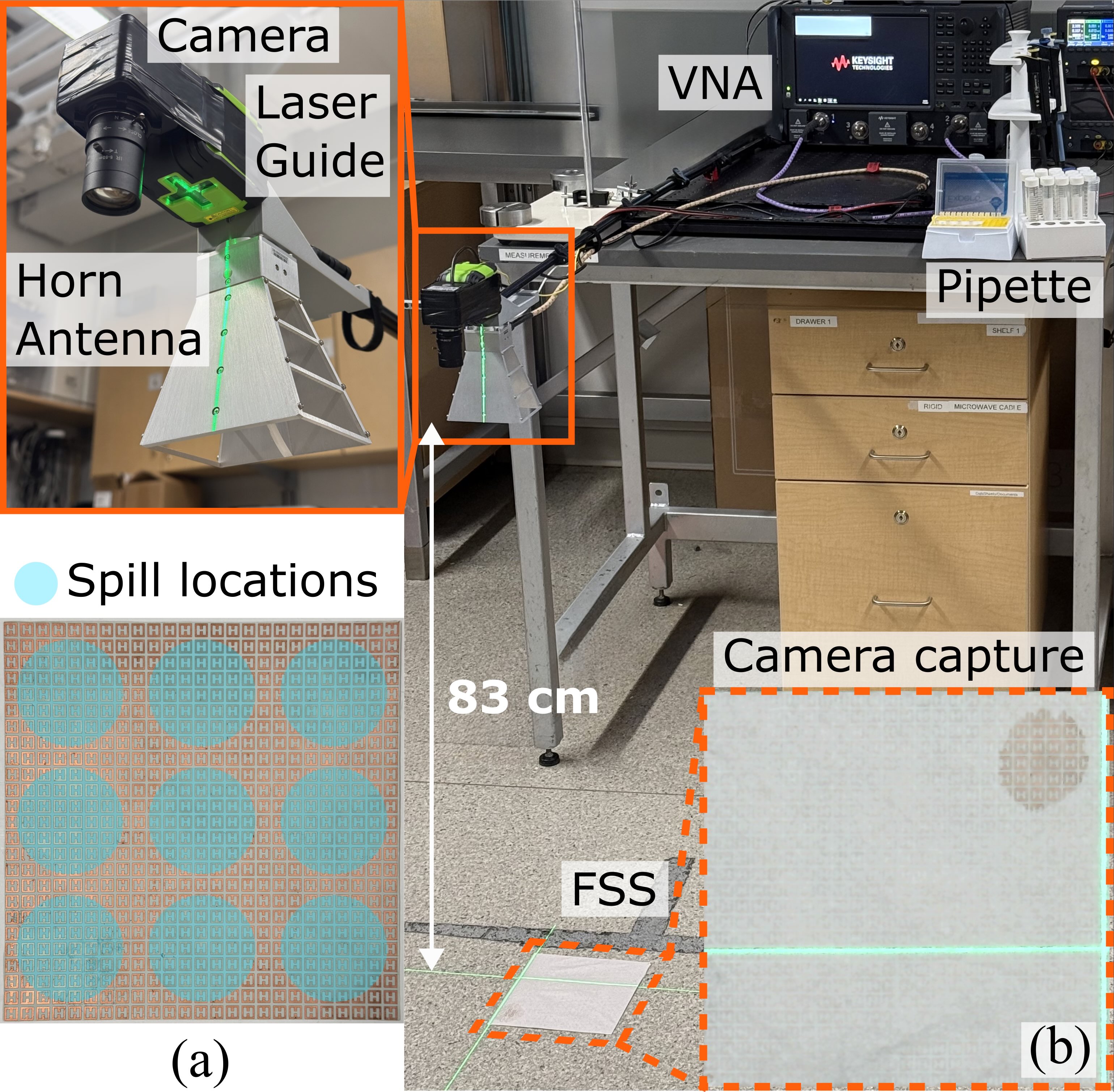
Scenario: Detecting liquid spills remotely.
Sensor: Frequency Selective Surface (FSS) tag.
Challenge: Signal depends on liquid type AND position.
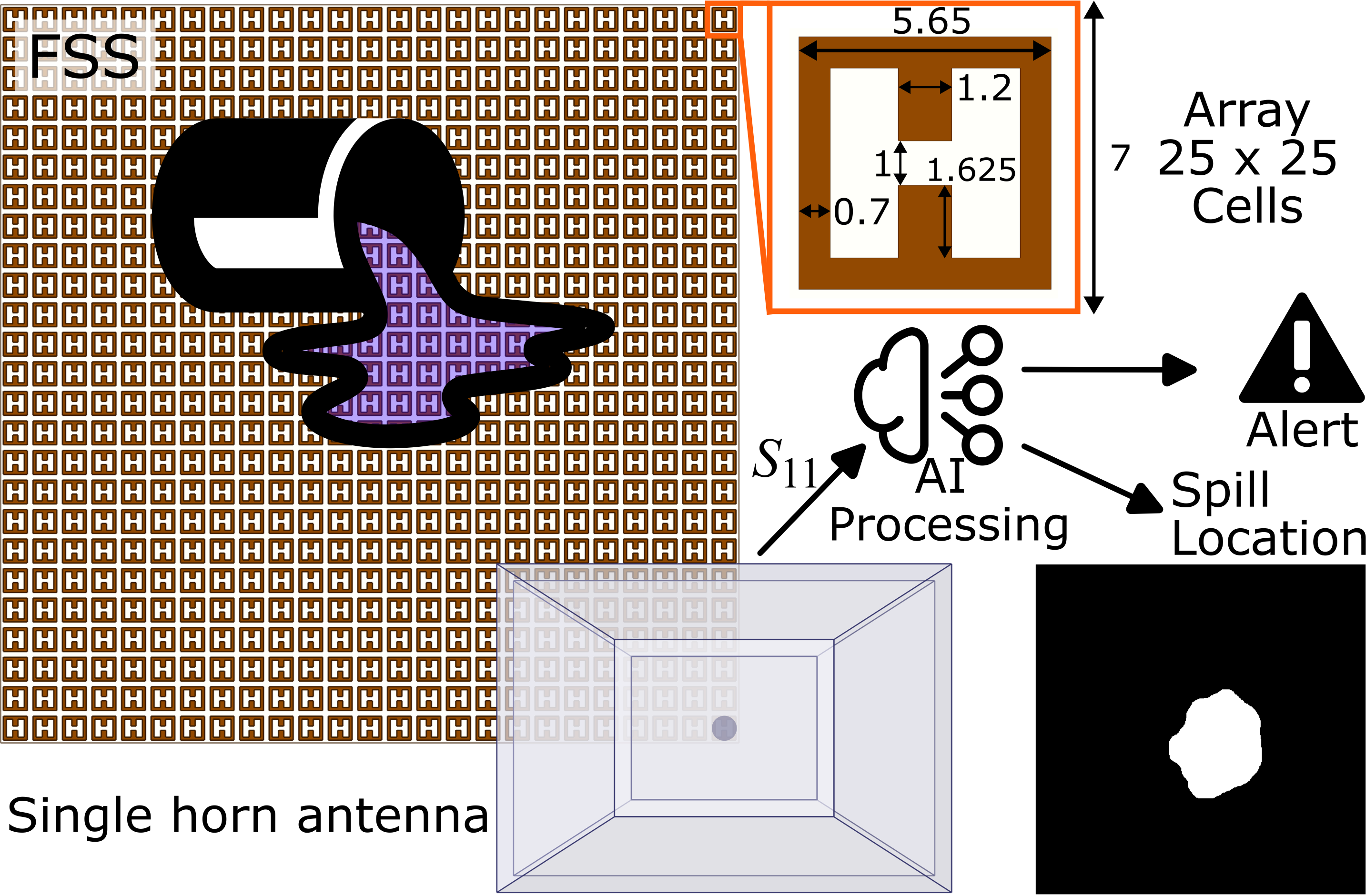
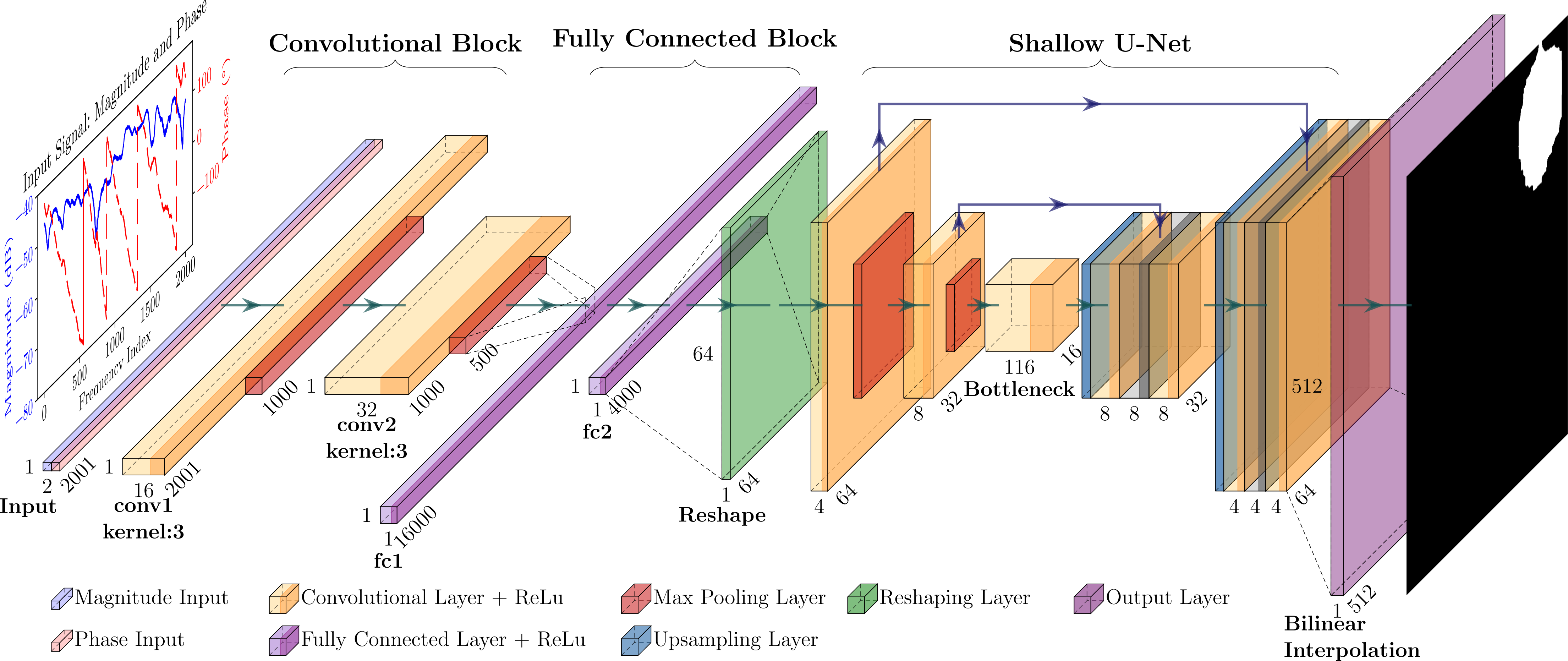
FSS Solution: CNN + U-Net
- Input: Single radar echo (1D spectrum).
- CNN Model: Signal feature extraction.
- MLP Model: Latent space mapping.
- U-Net Model: Spatial Mask reconstruction.
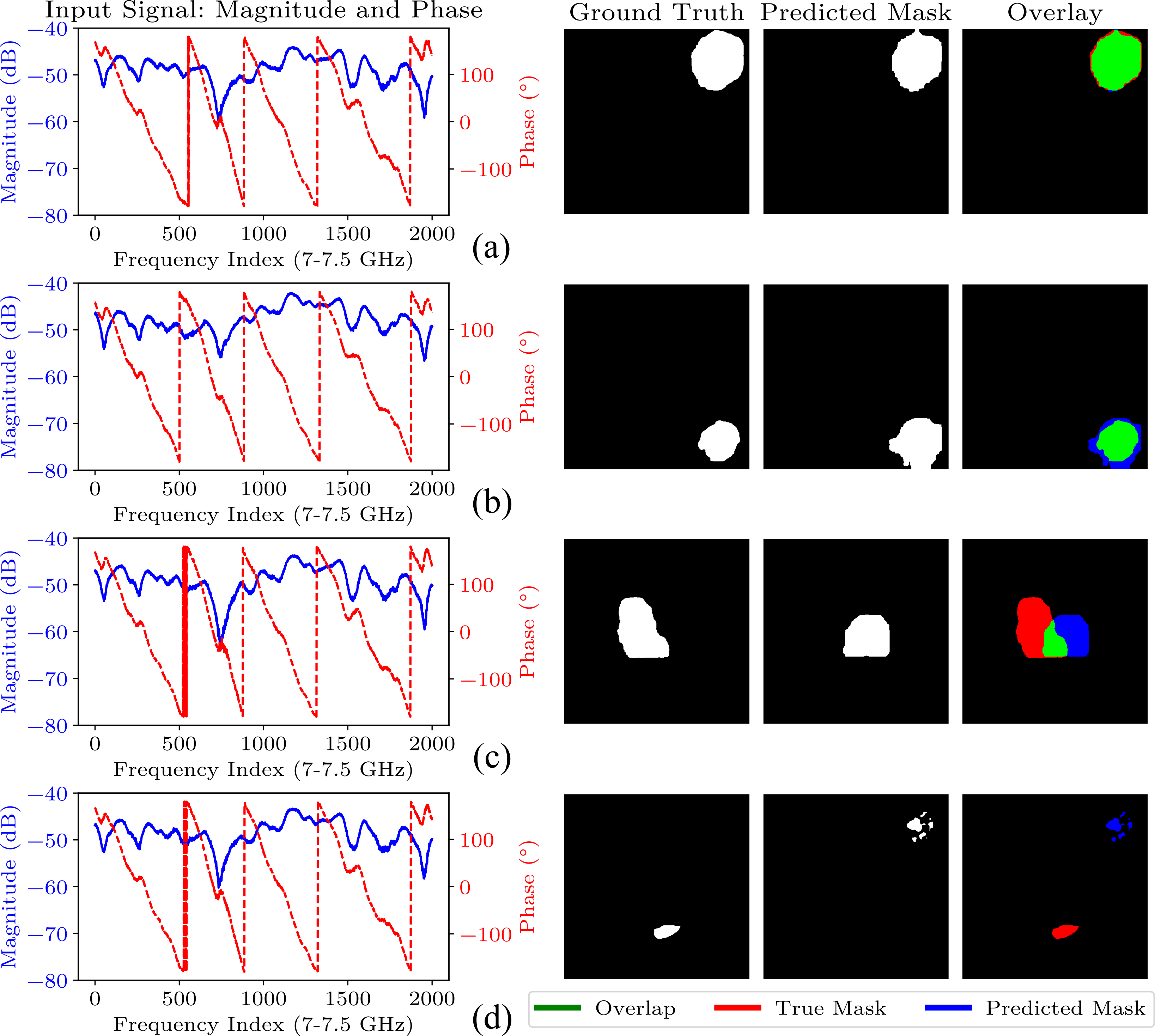
FSS Results
Output: Liquid Type + Spatial Image of the Spill.
We reconstruct an image from a spectral microwave measurement!
Case 2: Multi-Analyte Sensing
Goal: Measure Glucose, Sodium, and Potassium simultaneously.
Context: Blood analysis.
Challenge: Selectivity. Distinguishing ions from glucose.
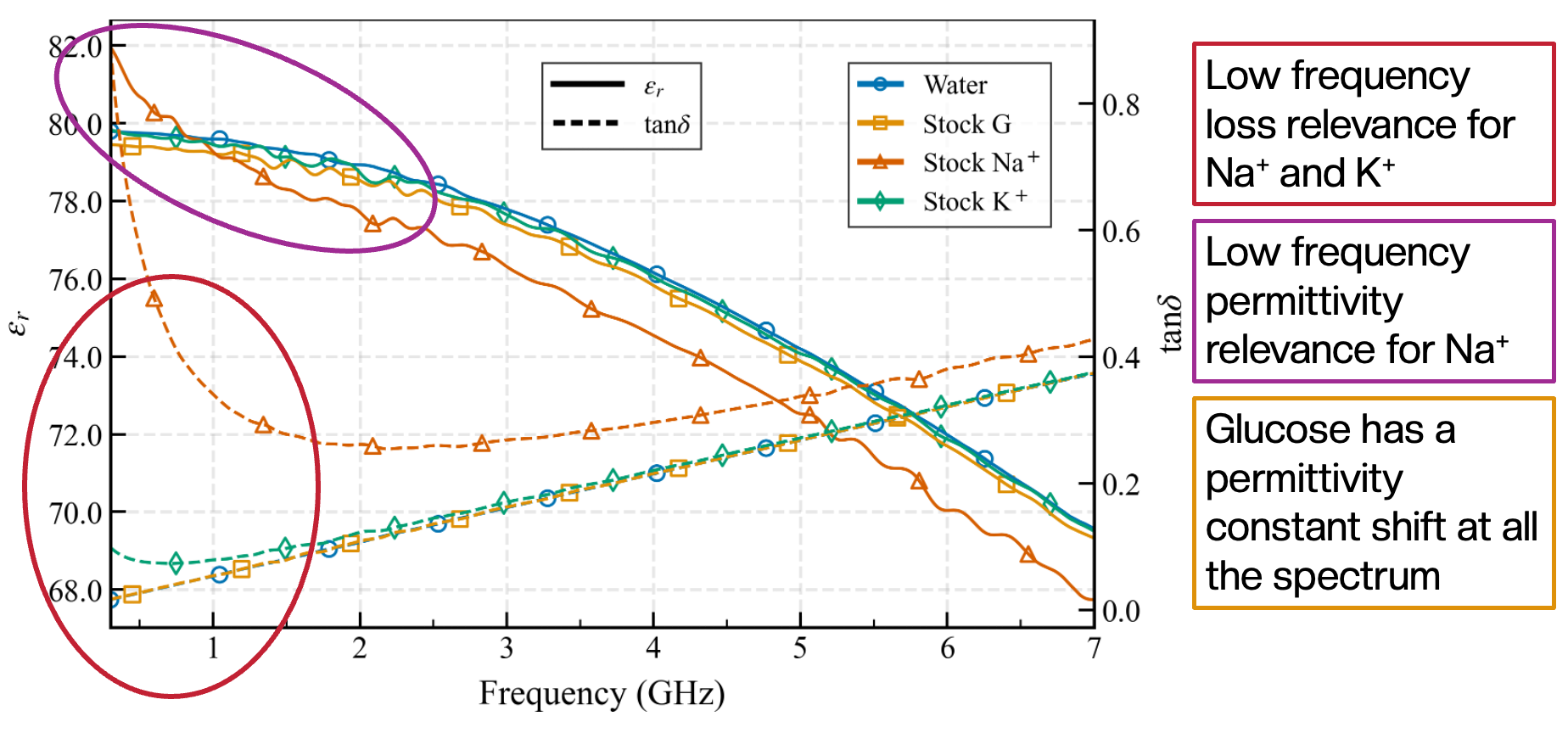
Multi-Analyte Sensor Design
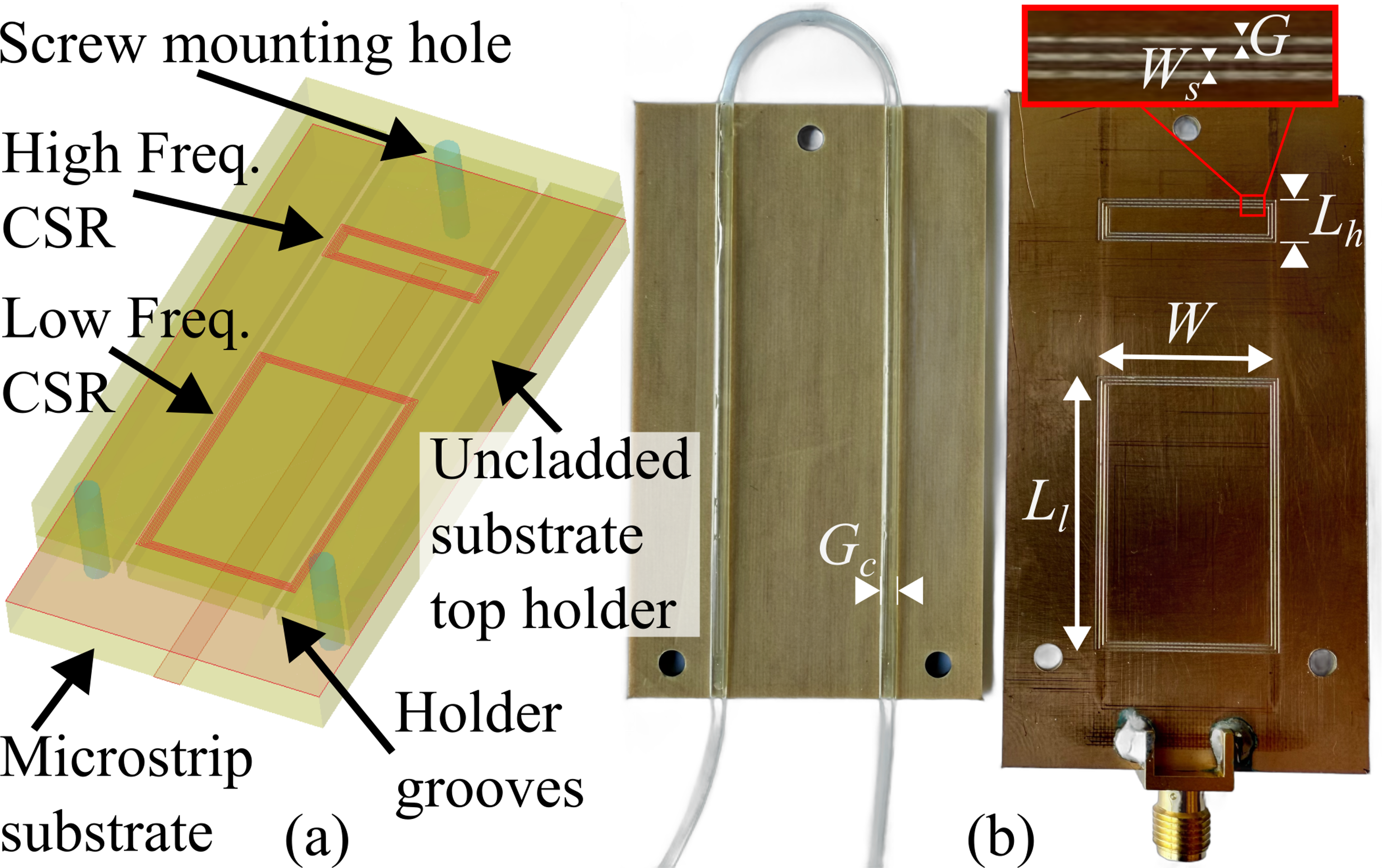
- Sensor: Multi-resonant spiral sensor.
- Feature: Broadband response (100 MHz - 6 GHz).
- Design: Optimized to have features sensitive to different components.
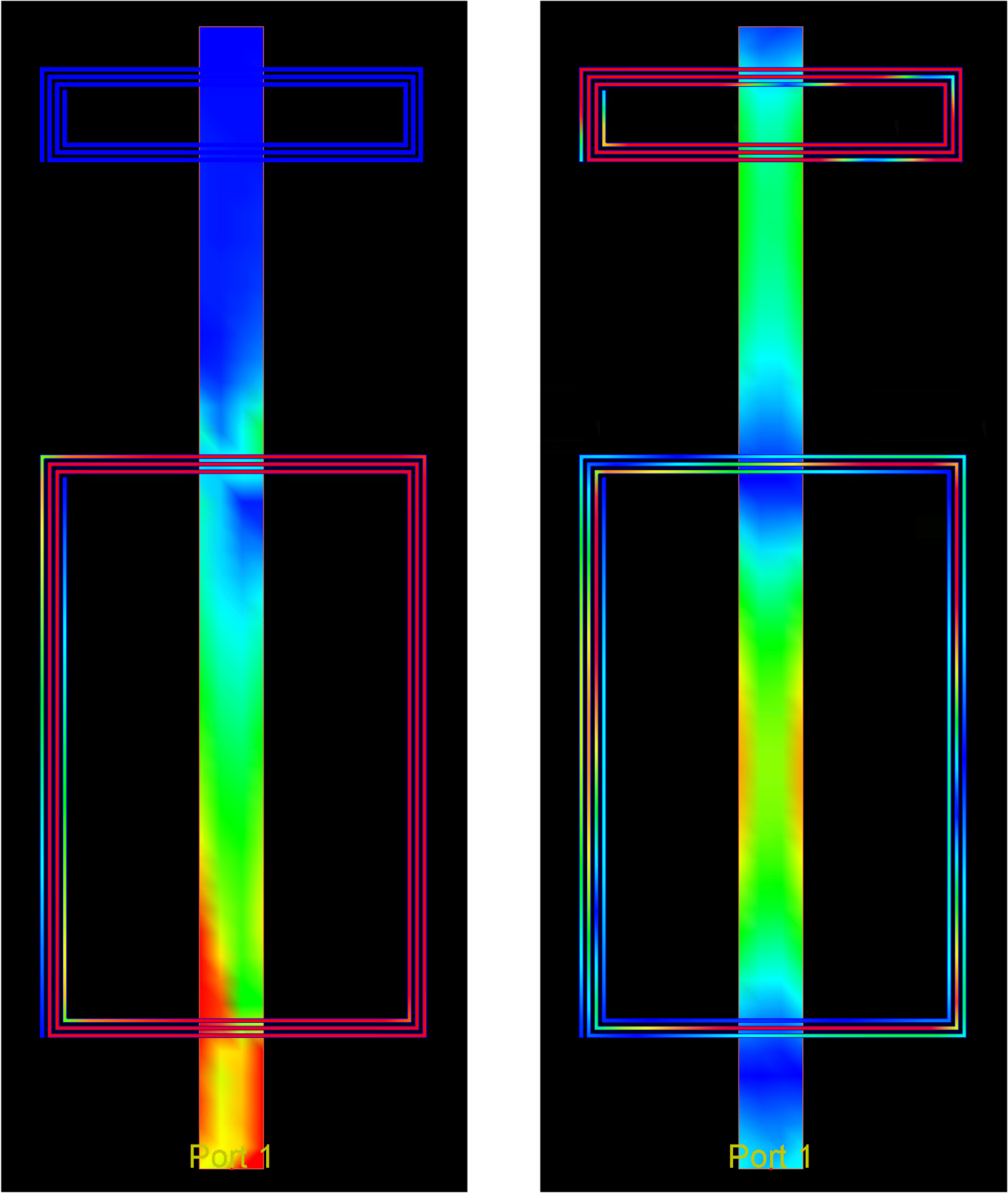
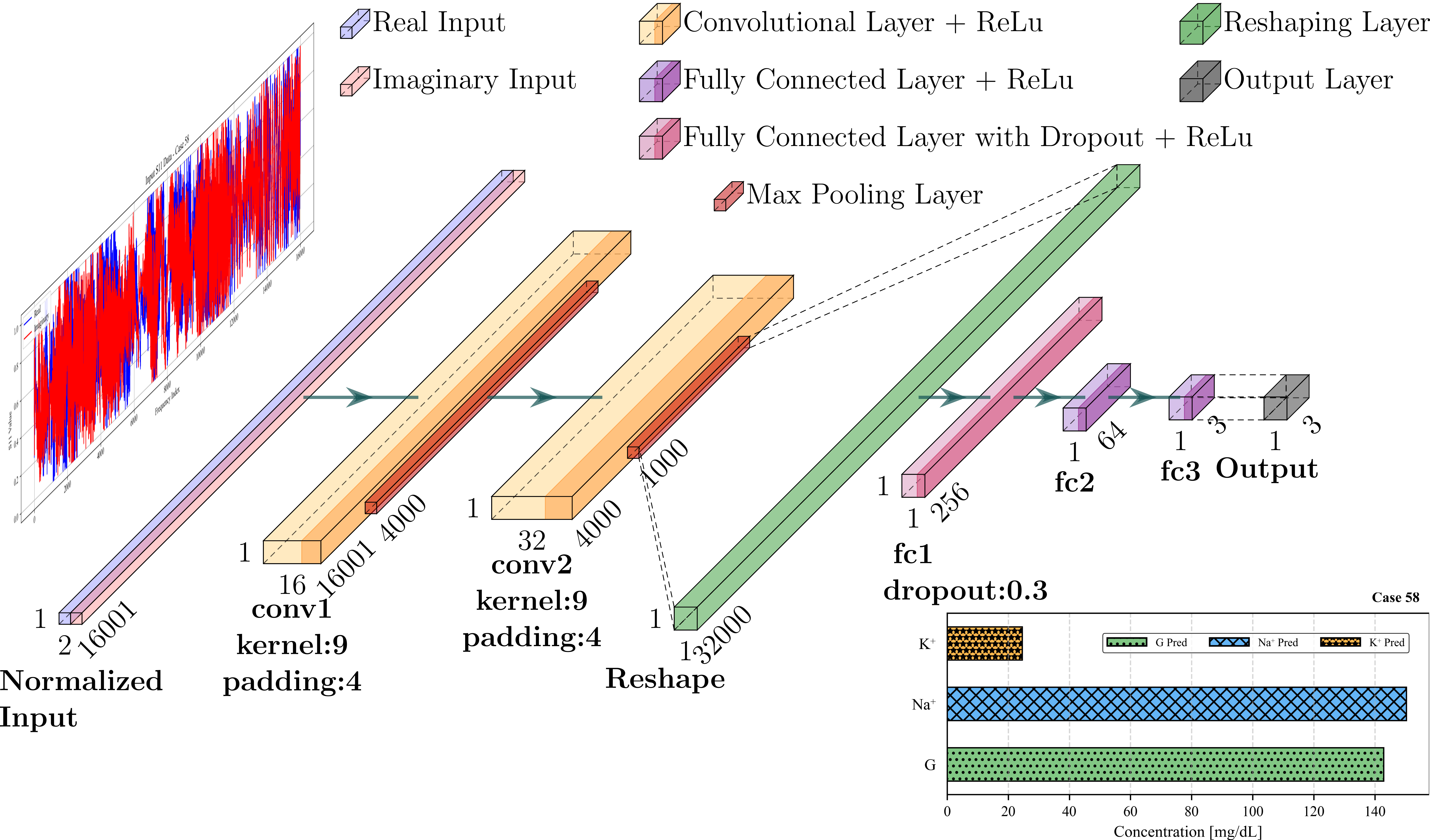
Data Generation
- Automated System: Used the microfluidics system from Objective 2.
- Dataset: Hundreds of mixtures with a set of concentrations.
- Model: CNN + Regression Neural Network.
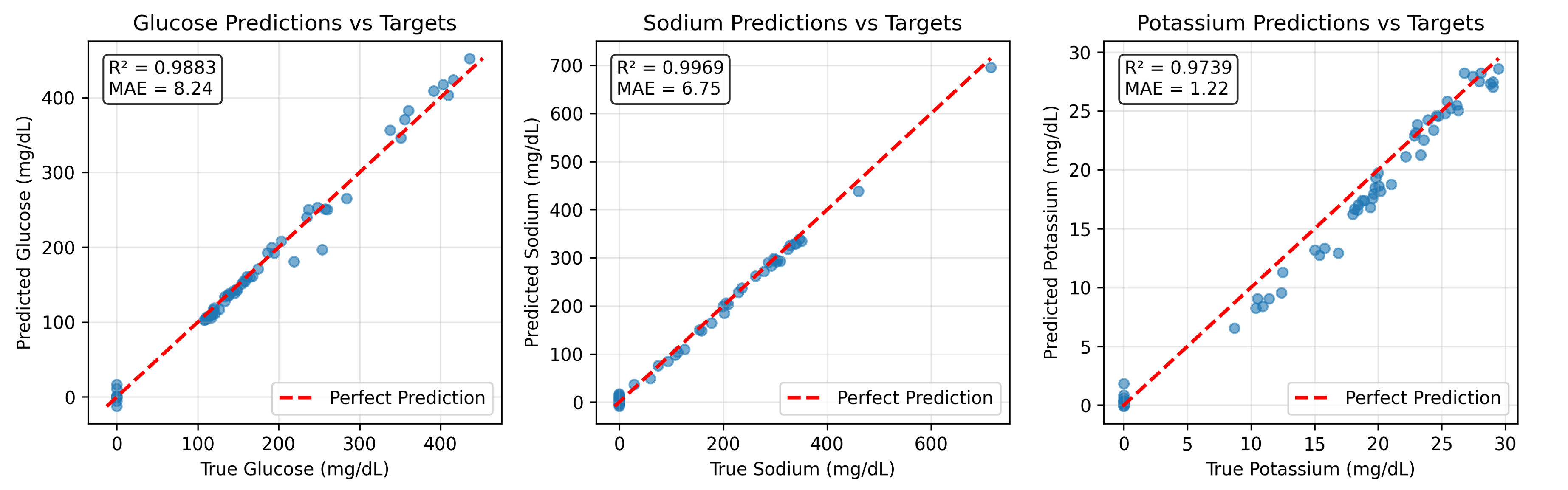
Multi-Analyte Sensor Results
- Model: Regression Neural Network.
- Outcome: Accurate concentrations for all 3 solutes.
- Error: Low enough for clinical screening potential.
Applications & Discussion
Evolution of Performance
Figure of Merit (FoM): Sensitivity / Size.
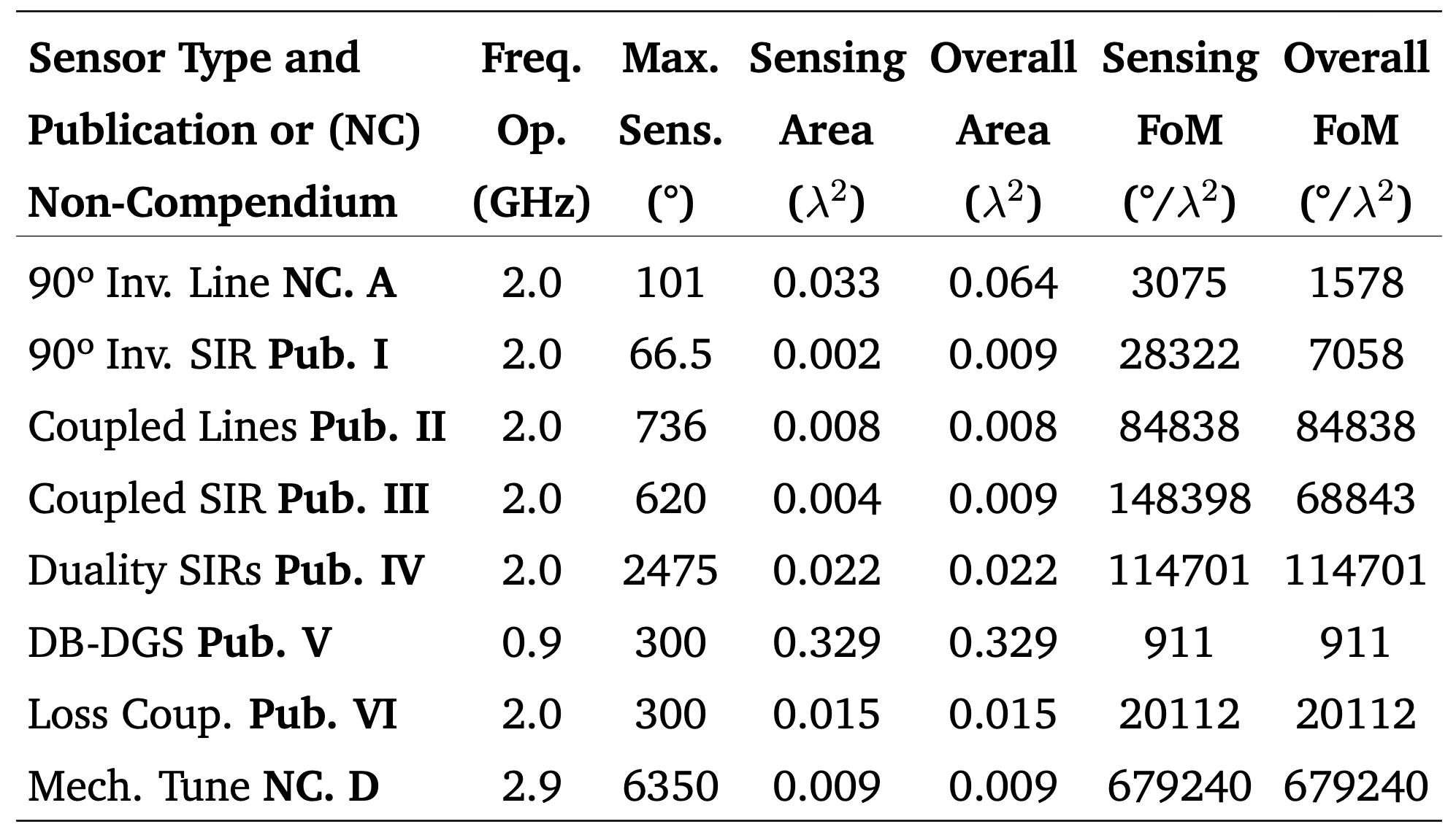
Consistent trend: Higher sensitivity in smaller footprints.
Loss Engineering and Tunability
Paradigm Shift: Loss is usually bad.
Our Finding: Controlled loss can sharpen the phase response.
- Used resistors/JFETs to tune sensitivity.
- Loss as a Design Parameter.
- Enables dynamic adjustment of sensitivity for specific application requirements.
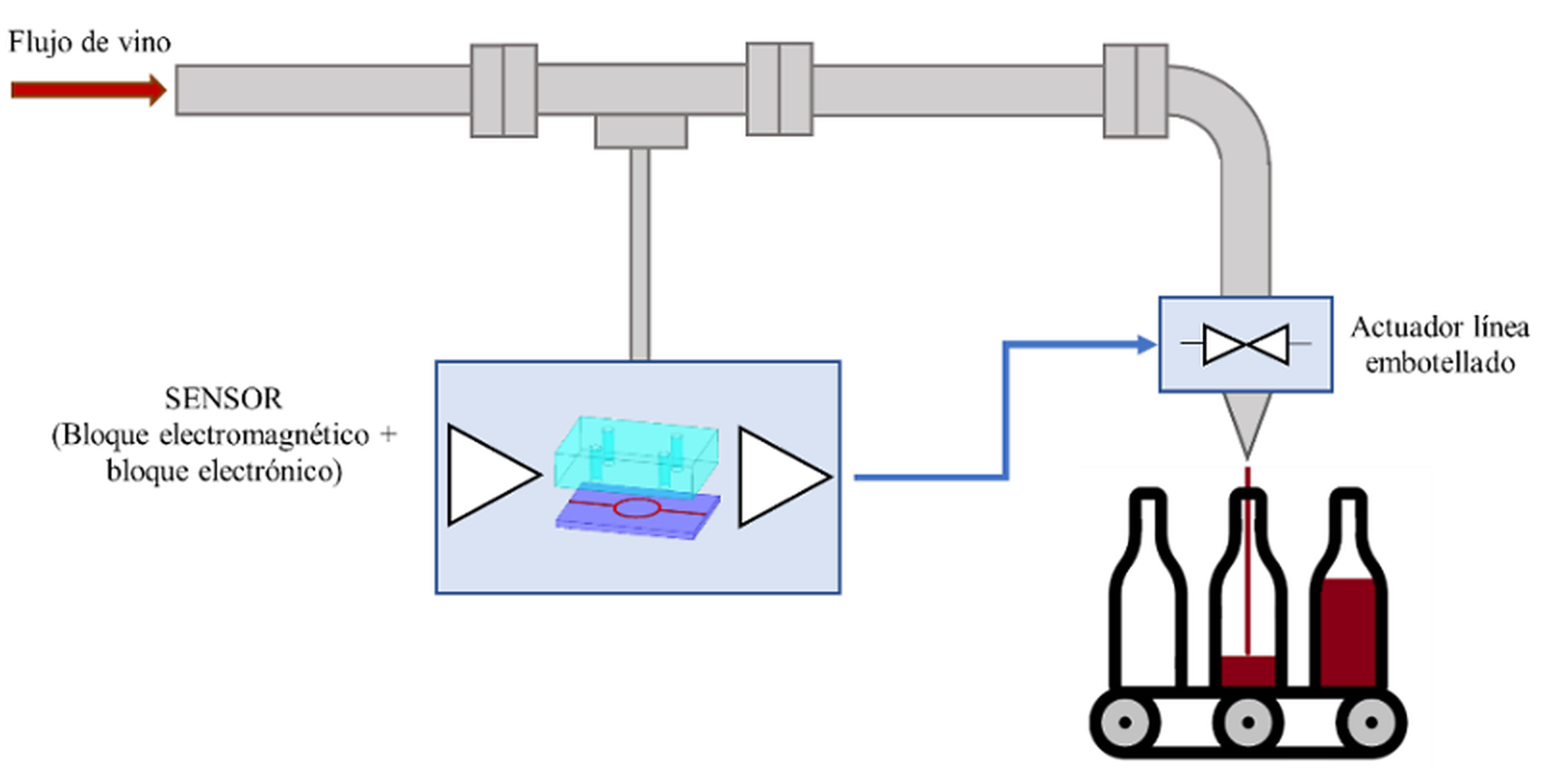
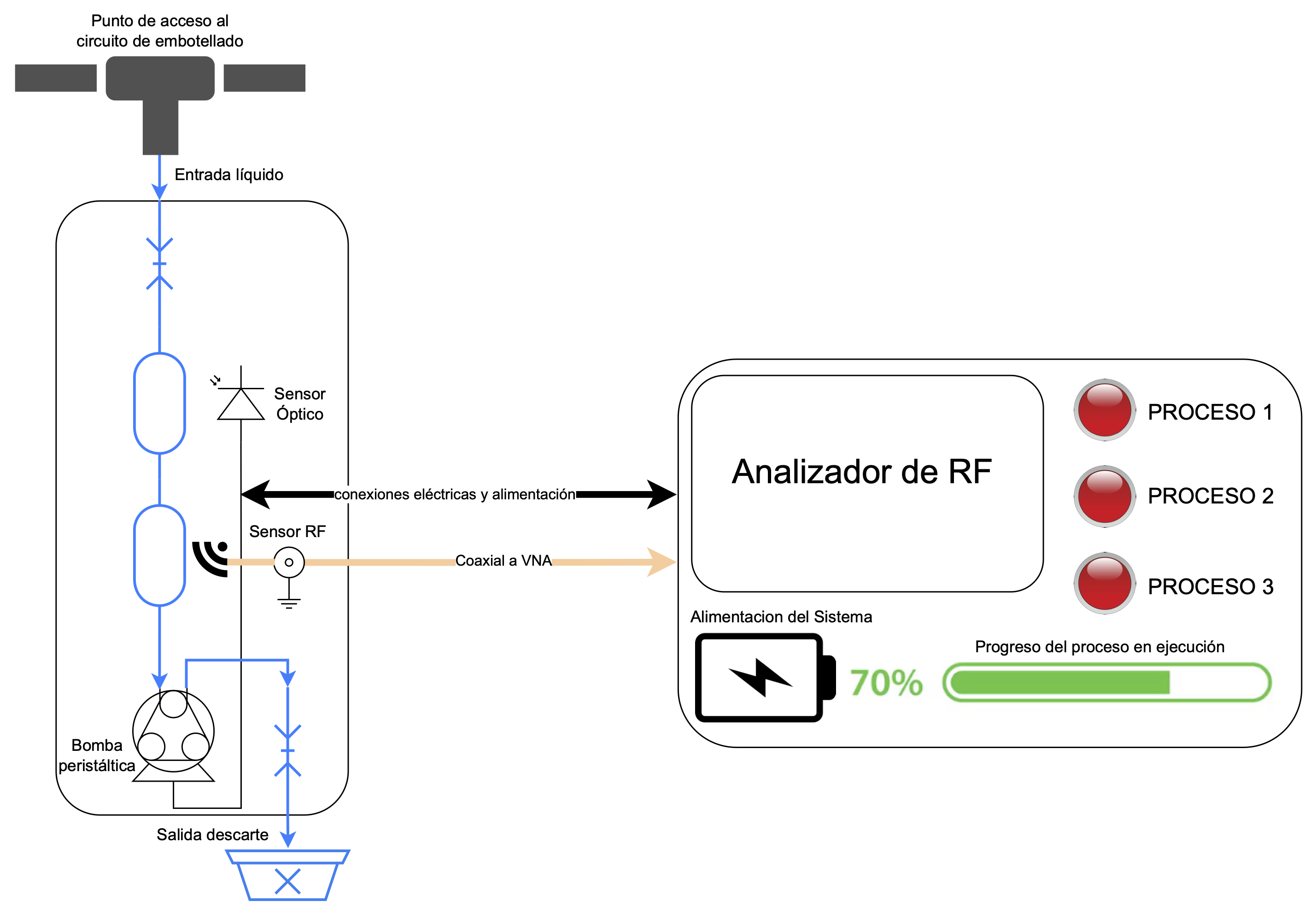
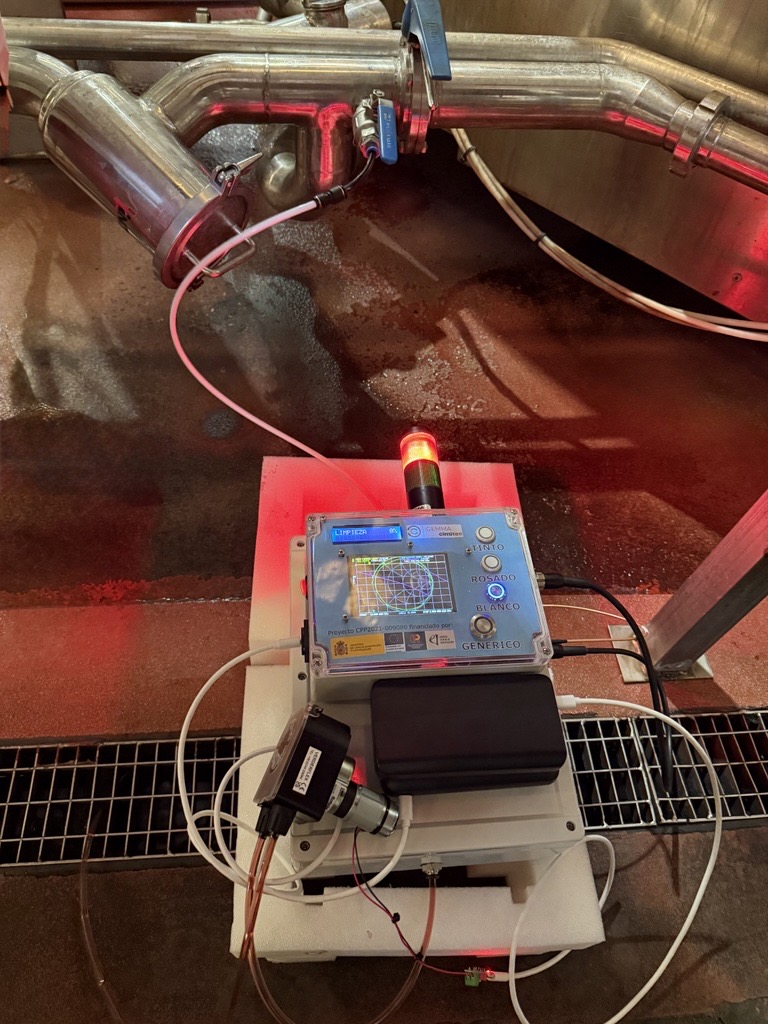
Application: Agrifood
Smart Cellar Project
- Goal: Monitor Clean in Place process to reduce waste.
- Tech: Planar sensors integrated in pipes.
- Partner: Garcia Carrion - CPP Project.
Application: Agrifood
Smart Cellar Project
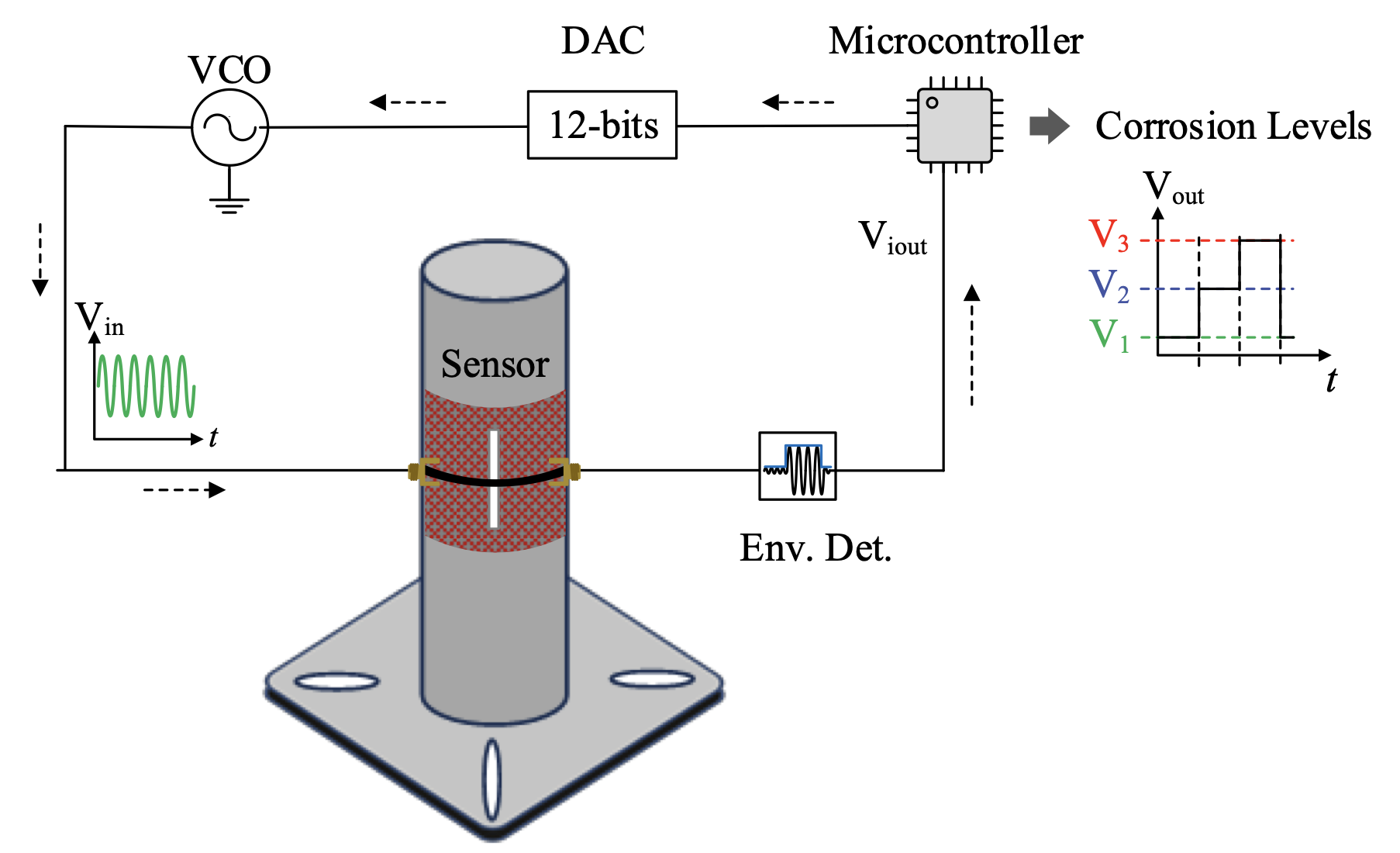
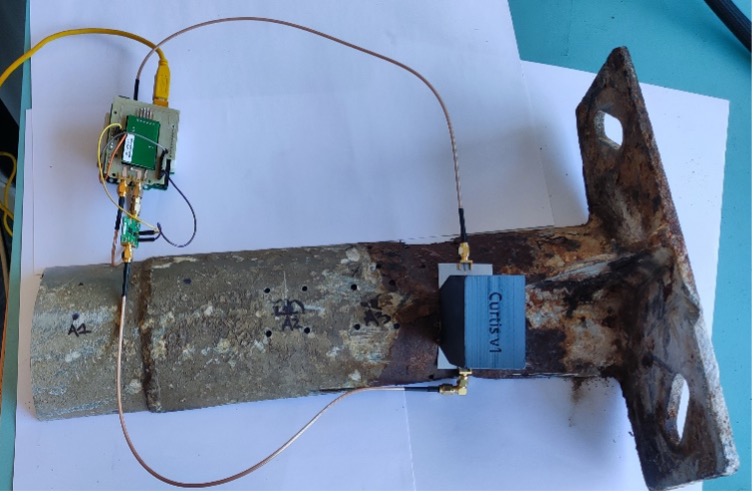
Application: Structural Health
Corrosion Detection
- Goal: Detect rust on street light poles.
- Tech: Resonance-Antiresonance sensors.
- Partner: RUBATEC.
Application: Remote Sensing
WiFi CSI Monitoring
- Goal: Use existing WiFi signals for sensing.
- Tech: AI analysis of Channel State Information.
- Outcome: Passive environmental monitoring.
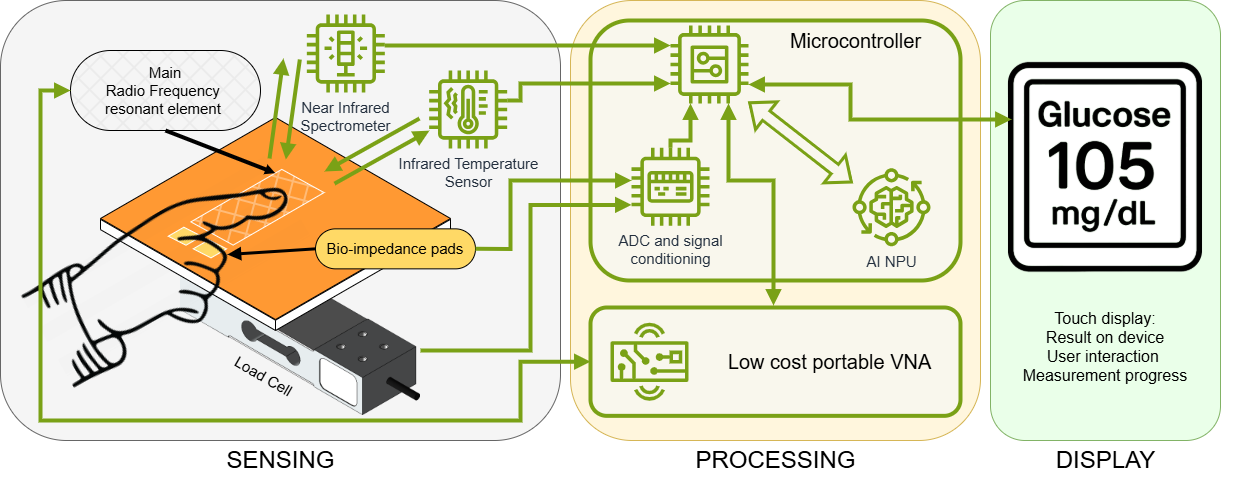
Application: Biomedical
Non-Invasive Glucose
- Goal: Non-invasive measurement of glucose in blood.
- Tech: Multi-Analyte sensor + Sensor Fusion + AI.
- Status: Proof of concept successful.
Future Work & Conclusions
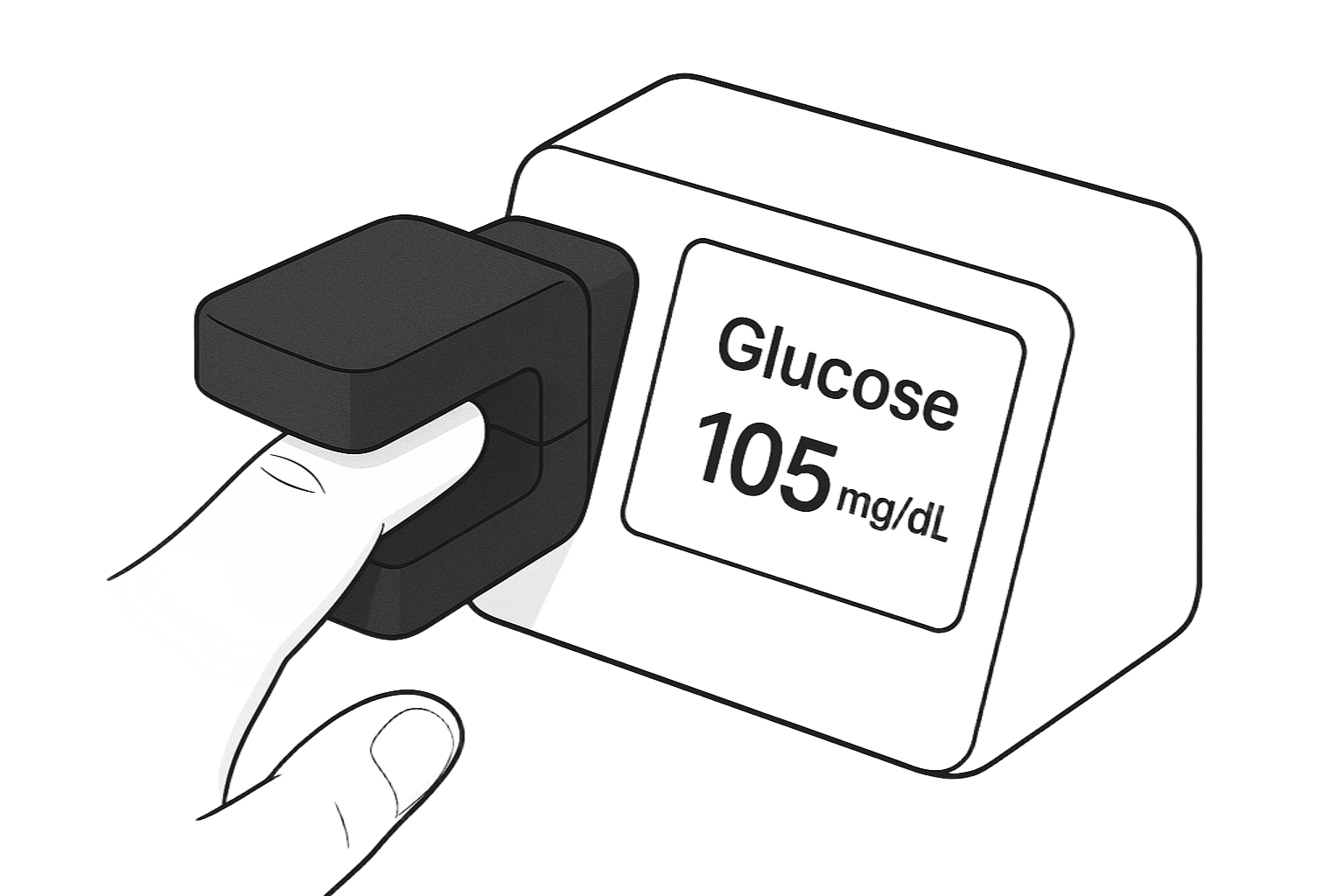
Future Work: Immediate
Post-Doc Project
- Focus: Non-invasive Glucose Monitoring.
- Plan:
- In-vivo measurements.
- Clinical validation.
- Miniaturization.
Future Work: Long Term
- Generative AI Design: AI designing the sensor.
- Commodity Hardware: Sensing with smartphones/WiFi chips.
- Multi-modal Fusion: Combining microwave with optical/acoustic.
Conclusions
- Sensitivity: Maximized via phase-slope techniques (Inverters, Coupling, Loss).
- Methodology: From analytical design to AI-driven paradigm.
- Impact: Validated in real applications (Liquids, Remote, Bio).
A complete journey from fundamental physics to intelligent systems.
Acknowledgements
Thank you to:
- Prof. Ferran Martín
- GEMMA-CIMITEC Group
- Funding Agencies (FPU, CPP)
- Collaborators (UBC, RUBATEC, Garcia Carrion)
- Family & Friends
Thank You!